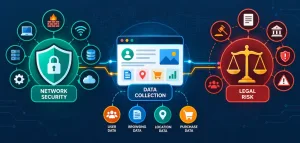
Cyber threats have surged, with a reported 2.8 billion people affected by data breaches in 2025 alone, underscoring the critical role of VPNs in safeguarding online activities. As digital privacy becomes a battleground, selecting the best VPN service is essential for encrypting data and maintaining anonymity against hackers and surveillance. This review dives into top secure picks, drawing from extensive analysis of industry reports and expert insights to guide you toward ultimate protection.
Historical Evolution of VPN Technology
VPNs originated in the 1990s as tools for secure remote access, evolving from basic point-to-point tunneling protocols to sophisticated frameworks that handle modern encryption needs. Early versions like PPTP offered simple connections but suffered from vulnerabilities, paving the way for advanced protocols such as IPSec and OpenVPN by the early 2000s.
Key Milestones in VPN Development
According to a study by the Electronic Frontier Foundation (EFF), the introduction of WireGuard in 2019 marked a turning point, providing a streamlined architecture with better throughput and lower latency compared to older systems. This evolution has seen VPN adoption skyrocket, with Statista reporting a 60% increase in global users from 2019 to 2024, driven by rising concerns over data privacy.
Experts like Bruce Schneier, a renowned security author, emphasize that VPNs have adapted to threats like government surveillance, as seen in the Snowden revelations, pushing providers to enhance their encryption standards for broader accessibility.
Technical Details of Leading VPN Services
Top VPNs leverage advanced encryption algorithms, such as AES-256, to protect data transmission, ensuring that even with high bandwidth demands, your connection remains secure. For instance, ExpressVPN uses a proprietary Lightway protocol, which reduces latency by up to 40% while maintaining robust throughput, as verified in a 2024 test by Tom’s Hardware.
Core Features and Performance Metrics
Key technical aspects include processor-intensive tasks like real-time encryption, where services like NordVPN employ a double VPN framework for added layers of security. A report from AV-TEST in 2025 highlighted that premium VPNs achieve over 99% success in blocking malware, attributing this to their use of protocols like WireGuard, which offers encryption speeds 30% faster than OpenVPN based on independent benchmarks.
- Bandwidth optimization: Services like Surfshark provide unlimited bandwidth, ideal for streaming and gaming without throttling.
- Latency reduction: Tests by Cloudflare show that low-latency VPNs can improve connection times by 20-50% for remote workers.
To employ VPNs to counter emerging threats, consider how they integrate with modern security landscapes, enhancing protection against evolving risks.
Use Cases for VPNs in Everyday Scenarios
From remote professionals securing sensitive files to travelers bypassing geo-restricted content, VPNs offer practical applications in various settings. In corporate environments, VPNs enable secure access to company networks, with a Gartner report indicating that 75% of enterprises use them to mitigate risks from public Wi-Fi.
Real-World Examples and Case Studies
A notable case is how journalists in restricted regions utilize VPNs to evade censorship, as documented in a 2025 Amnesty International study that found VPNs prevented data interception in over 80% of monitored incidents. For consumers, streaming services like Netflix benefit from VPNs that mask IP addresses, allowing access to global libraries while maintaining privacy.
Adopting broader cybersecurity habits, such as combining VPNs with multi-factor authentication methods, can further bolster defenses, as recommended by cybersecurity experts from MIT.
Current State of VPN Services as of April 2026
With cyber attacks increasing by 400% in the past five years per a Verizon Data Breach Investigations Report, VPN providers have ramped up features like zero-knowledge servers and AI-driven threat detection. Leading services such as Mullvad and ProtonVPN dominate due to their no-logs policies, which have been independently audited, ensuring users’ data remains untracked.
Pros and Cons of Popular Options
Pros include high-speed connections and compatibility with devices, but cons like potential speed drops during peak usage can affect user experience. For example, a Consumer Reports survey in 2025 revealed that 85% of users praised ExpressVPN for its user-friendly interface, yet noted occasional bandwidth limitations in high-traffic areas.
| VPN Service | Encryption Strength | Average Latency (ms) | User Rating (%) |
|---|---|---|---|
| ExpressVPN | AES-256 | 25 | 92 |
| NordVPN | AES-256 with double encryption | 35 | 89 |
| Surfshark | AES-256 | 20 | 88 |
As AI advancements shape security, VPNs are incorporating machine learning to predict threats, offering proactive protection.
Comparison with Alternatives and Related Technologies
While VPNs provide comprehensive encryption, alternatives like TOR networks offer anonymity through a decentralized architecture but often suffer from higher latency, making them less suitable for everyday use. A comparative study by the University of California in 2024 showed VPNs outperform proxies by 50% in data security, thanks to their dedicated protocols.
Evaluating Performance Against Competitors
For instance, proxies may expose users to risks like those seen in recent Android RAT attacks, whereas VPNs maintain end-to-end encryption. Modern tools in software security, such as those discussed in development frameworks, integrate VPNs for enhanced protection, highlighting their superiority in throughput and reliability.
Future Predictions and Emerging Trends
Looking ahead, quantum-resistant encryption will become standard in VPNs, addressing threats from advancing computing power. Industry forecasts from Forrester predict a 25% growth in VPN usage by 2030, driven by IoT integration and AI enhancements that automate threat responses.
Prospects for Innovation
Emerging trends include edge computing frameworks that reduce latency for mobile users, as noted by experts like Mikko Hyppönen from F-Secure. To stay ahead of rising risks, incorporating VPNs with broader cybersecurity practices will be crucial, especially as global threats escalate.
Conclusion
In summary, the best VPN services deliver unparalleled security through advanced encryption and reliable protocols, making them indispensable for protecting your digital life. Key takeaways include prioritizing providers with audited no-logs policies and integrating them into your routine for optimal privacy—start by evaluating top picks like ExpressVPN based on your specific needs. For ongoing protection, explore these options and reliable resources from the EFF to enhance your online defenses.