
CCNA
Cisco Certified Network Associate certification resources
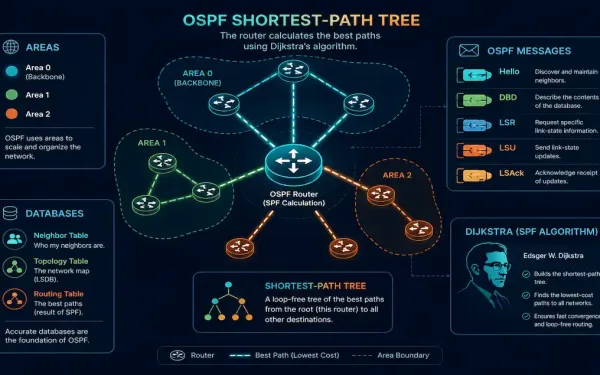
Introduction to Open Shortest Path First (OSPF)
Open Shortest Path First is a link-state routing protocol built to replace RIP, the distance-vector protocol that worked reasonably well in early, small networks but never scaled. RIP’s hop-count metric ignores bandwidth entirely and its full periodic table broadcasts don’t hold up as networks grow — problems OSPF was specifically designed to solve. Open Shortest...
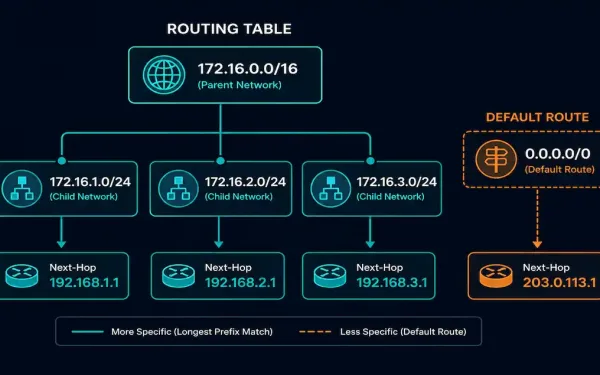
Best Route, Routing Table Terms, and the Lookup Process
When a router receives a packet, it doesn’t just glance at the destination address and pick whichever route looks close enough — it runs a specific, hierarchical process to find the single best match. Understanding that hierarchy, and the terminology Cisco uses to describe it, is essential CCNA and CCNP material that goes a level...
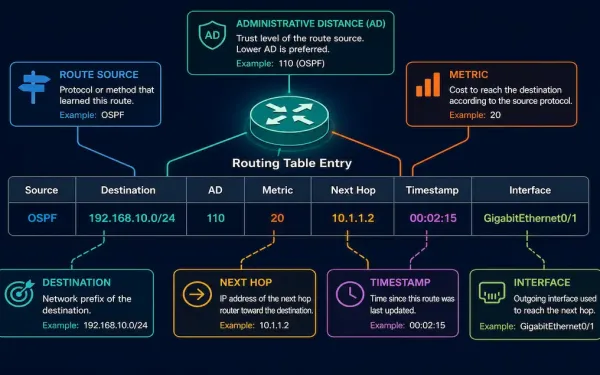
Routing Table Entries and How the Lookup Process Actually Works
A router’s core job is directing traffic across multiple networks, and it does that using a routing table — a list of known networks and the directions to reach them. Each entry in that table is called a route entry, or simply a route. Understanding what information a route entry actually contains, and how a...
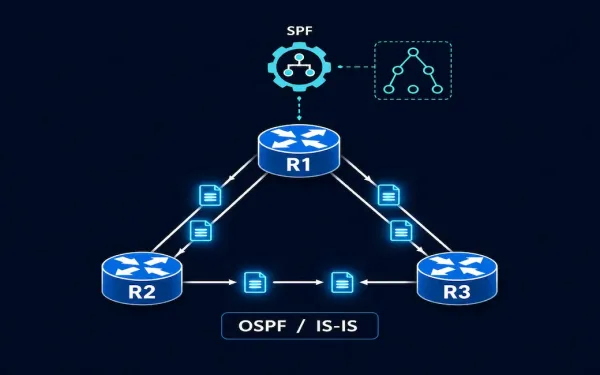
Link-State Routing Protocols Explained: How OSPF and SPF Work
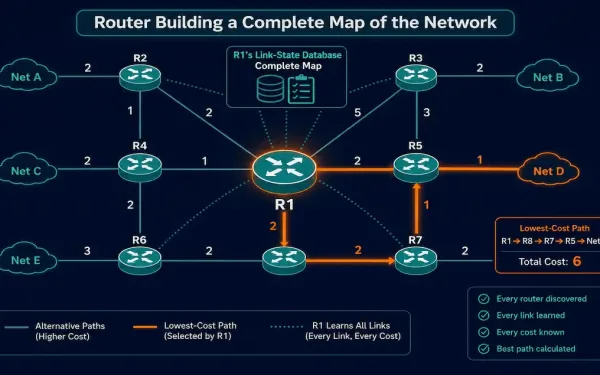
Link-state routing protocols are also known as shortest-path first protocols. They maintain a complete picture of all the routers running a link-state routing protocol in the entire network. All routers running a link-state routing protocol originate information about themselves and their directly connected routers, links, and the state of those links as multicast messages. The...
The Shortest Path First (SPF) Protocol: Link-State Routing with Dijkstra’s Algorithm
Efficient routing matters most in complex topologies with many possible paths between two points. The Shortest Path First protocol — better known as link-state routing — uses Edsger Dijkstra’s shortest-path algorithm to work out the genuinely optimal path for forwarding packets, rather than relying on a simpler metric like hop count. Open Shortest Path First...
RIPng Configuration: Advertising IPv6 Networks with RIP Next Generation
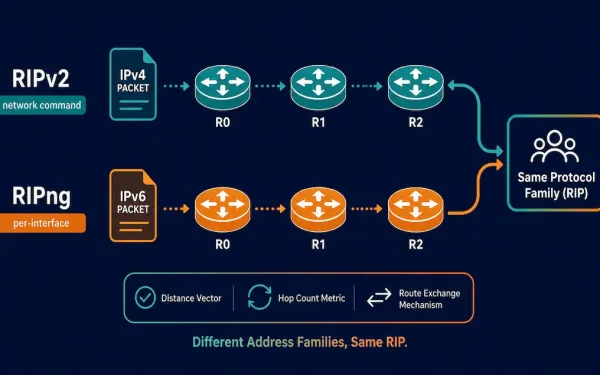
RIPng (RIP Next Generation) is the IPv6 adaptation of RIP, defined in RFC 2080. It’s a distance-vector protocol that keeps RIP’s core simplicity — hop count as the metric, a 15-hop maximum, periodic updates — while adapting the protocol’s mechanics for IPv6 addressing. This guide covers how RIPng differs from RIPv2, how to configure it,...
Routing Information Protocol (RIP): Configuration, Passive Interfaces, and Default Route Propagation
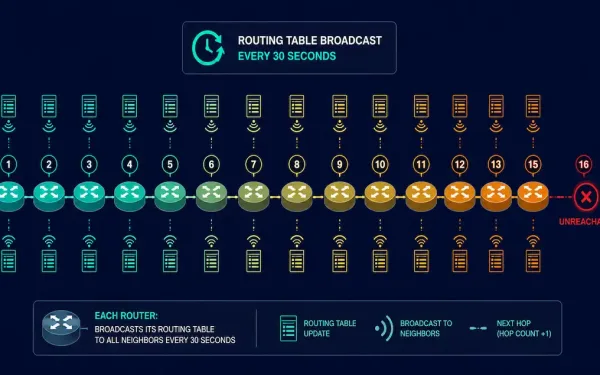
Routing Information Protocol (RIP) is a dynamic routing protocol that lets routers running IP share information about how to reach other networks. It’s rarely used in production networks today, but it remains the standard starting point for learning dynamic routing, and it’s directly tested on the CCNA exam. This guide covers how RIP works, how...
From Classful Network Addressing to CIDR and Fixed-Length Subnet Masking
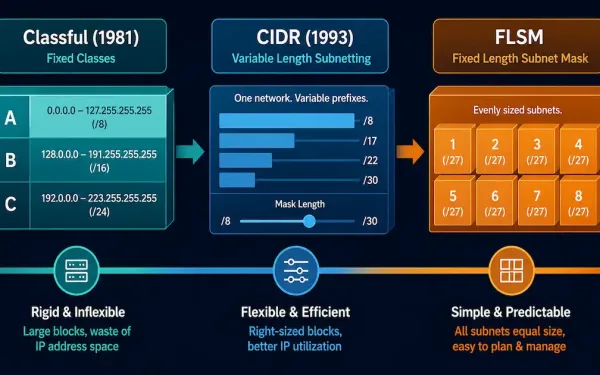
IPv4 addressing didn’t arrive in its modern form all at once. It started as a rigid, class-based system, was replaced by a far more flexible scheme called CIDR, and along the way developed subnetting techniques — starting with Fixed-Length Subnet Masking (FLSM) — for splitting a network into smaller pieces. Understanding this progression matters for...
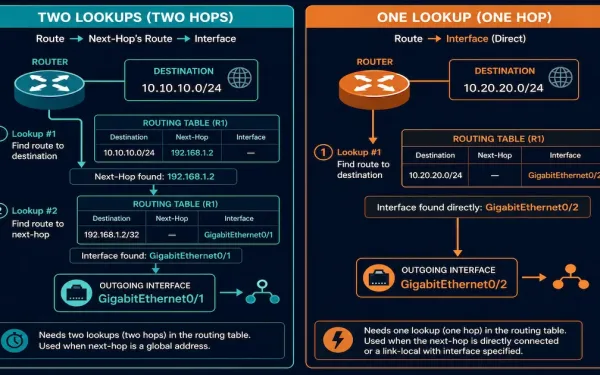
Static IPv6 Routes: Next-Hop Address vs. Directly Connected (Exit Interface)
A static IPv6 route can be built two different ways: pointing only at a next-hop IPv6 address, or pointing at an exit interface directly. These aren’t just two syntax options — they produce genuinely different lookup behavior in the router, and understanding that difference is core CCNA and CCNP material. This guide covers both forms,...
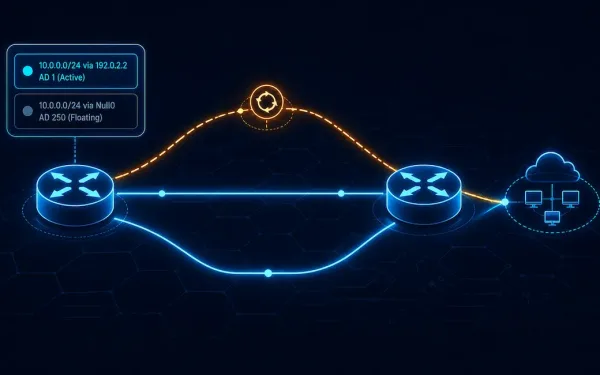
IPv6 Route Command: Configuring Static Routes on Cisco Routers
If you already know how to configure a static route for IPv4, configuring IPv6 static routes will feel familiar — the syntax and underlying logic are nearly identical, with only minor differences. IPv6 static routes are configured using the ipv6 route command in global configuration mode. The general syntax is: The parameters here map almost...