Asad Ijaz
Lead Networking Architect and Editor at NetworkUstad. BS in Computer Networks and Security, CCNP and CCNA certified, with 11+ years of experience in enterprise network design, implementation, and troubleshooting. Writes practical tutorials on routing, IPv4 management, network automation, and security fundamentals.
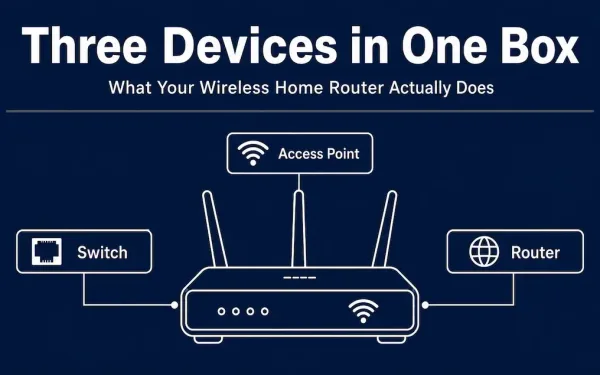
Wireless Home Router: How It Works and How to Choose One in 2026
A wireless home router is the device that connects every gadget in your house to the internet. It sits between your internet service provider’s modem and your phones, laptops, smart TVs, and IoT devices, translating one internet connection into a shared network everyone can use. Choosing the right router matters more than most people realize...
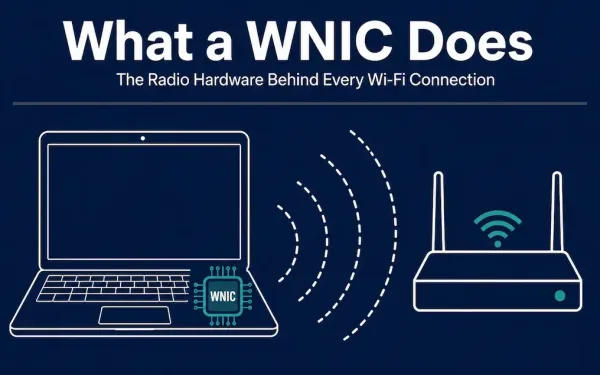
Wireless Network Interface Card (WNIC): How It Works, Types, and What Matters in 2026
Every device that connects to Wi-Fi does so through a Wireless Network Interface Card — the radio hardware that turns your data into radio waves and back again. Whether it’s a chip soldered onto your laptop’s motherboard, an M.2 module inside a desktop, or a USB dongle you plug in, the WNIC is what actually...
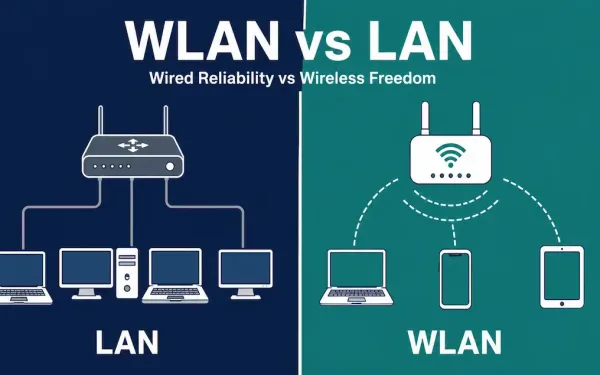
Comparison Between WLAN and LAN – Exclusive Explanation
Every network connects devices so they can share data. The two most common local network types are LAN and WLAN. A LAN uses physical cables to link devices together. A WLAN uses radio waves instead. Both serve the same basic purpose. But they differ in how they move data, how secure they are, and how...
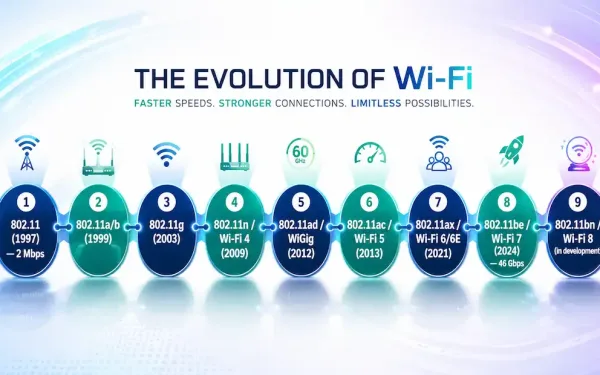
IEEE 802.11 Standards: A Complete Guide to Wi-Fi Generations
IEEE 802.11 is the family of standards that defines how wireless local area networks (WLANs) operate. Maintained by the Institute of Electrical and Electronics Engineers (IEEE), these standards specify how radio frequency signals in unlicensed ISM frequency bands are used at the Physical layer and the MAC sublayer of wireless links. Every Wi-Fi device you...
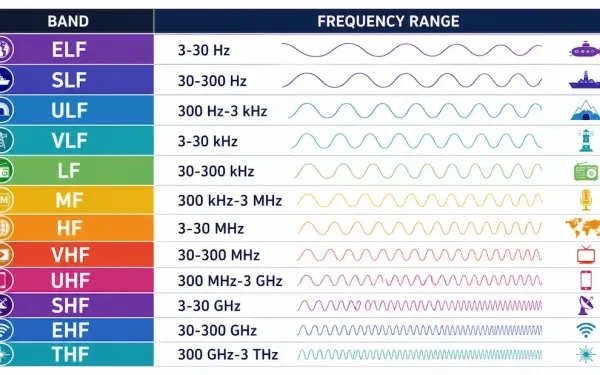
Radio Frequencies: The ITU Band Chart Explained
Radio frequencies are the range of electromagnetic wave oscillation used for wireless communication and broadcasting, spanning from 3 Hz up to 300 GHz. This band sits within the broader electromagnetic spectrum, alongside microwaves, infrared, visible light, ultraviolet, X-rays, and gamma rays — radio waves specifically have the longest wavelengths in that spectrum, ranging from a...
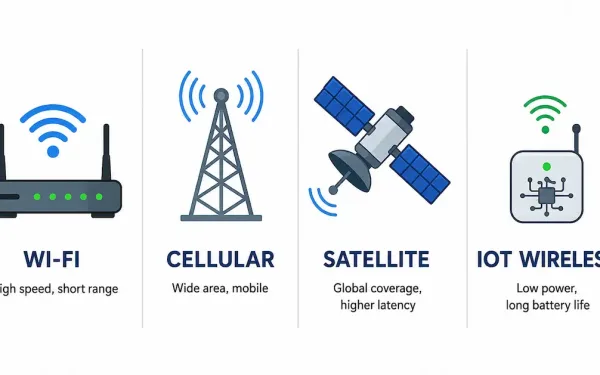
Wireless Technologies: Wi-Fi, Cellular, Satellite, and IoT Compared
Wireless communication covers a wide range of distinct technologies, each built for a different range, use case, and set of trade-offs. This article surveys the major categories — Wi-Fi, cellular, satellite, and short-range IoT wireless — with verified figures rather than speculative predictions. Wi-Fi: The Current Generations Three Wi-Fi generations are in active use today,...
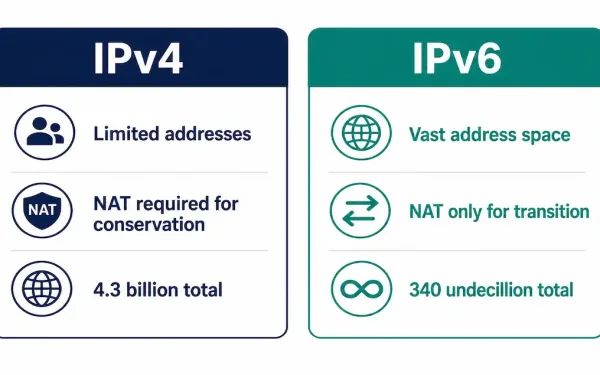
NAT for IPv6: ULA, NAT64, and IPv6 Transition Mechanisms
IPv6’s 128-bit address space — roughly 340 undecillion addresses — removes the core reason IPv4 needed NAT in the first place. But NAT hasn’t disappeared entirely from the picture; it’s just doing a different job now. Instead of conserving scarce addresses, IPv6-era NAT exists almost entirely to bridge the gap during the transition period —...
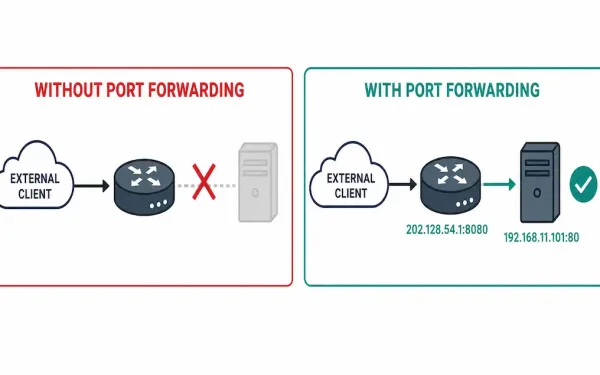
Introduction to Port Forwarding (and How to Configure It)
Port forwarding maps a specific external port to a specific internal IP address and port, letting external devices reach a service on a private network despite NAT normally blocking any unsolicited inbound connections from ever reaching that internal host. It’s how a home server, a game console, or a remote-access tool becomes reachable from outside...
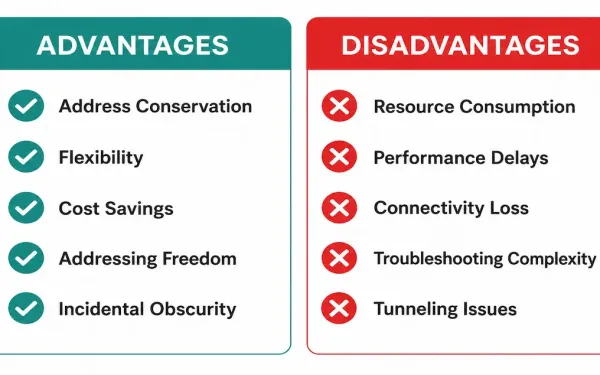
NAT Advantages and Disadvantages
NAT is a genuine trade-off, not a free win. It solved IPv4 exhaustion well enough that IPv6 adoption has taken decades longer than originally expected — but it does that by breaking assumptions a lot of other protocols were originally built on. Understanding both sides matters for CCNA and CCNP exams specifically, since questions routinely...
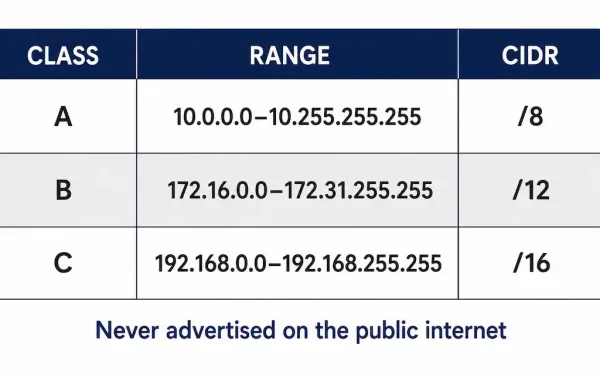
Network Address Translation (NAT) & RFC 1918 Private IPv4 Addresses
IPv4 only has about 4.3 billion addresses total — a number that looked enormous in the early 1980s and nowhere near enough once personal computing and the web took off. Network Address Translation, alongside RFC 1918 private addressing, is the pairing that kept IPv4 usable for decades past when it otherwise would have run out....