Search Results
Showing results for "business" (3641 articles found)
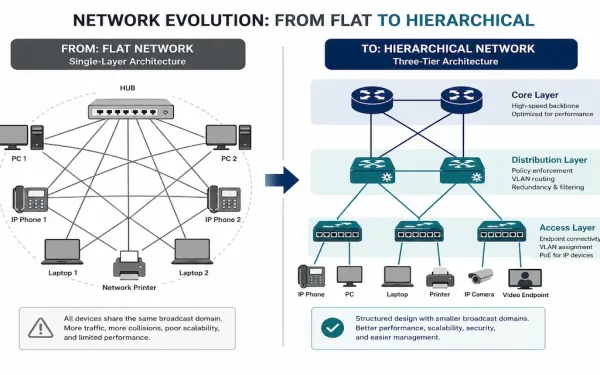
The Role of Switched Networks: From Flat LANs to Hierarchical Design
Early campus LANs relied on hubs and repeaters — simple devices that repeated every incoming signal out every other port, regardless of who actually needed it. As networks grew, this flat design became a genuine bottleneck: more devices meant more broadcast traffic flooding every segment, whether or not it was relevant there. Switched networks, built...
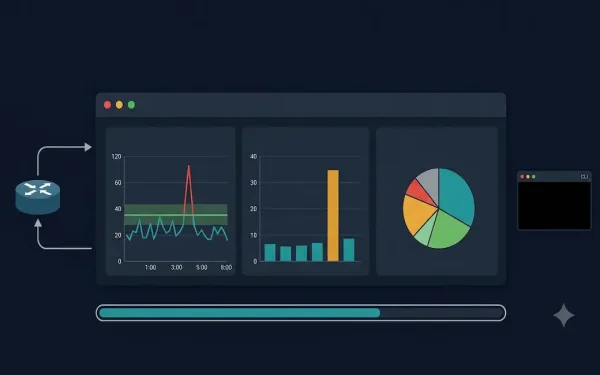
Network Baseline: What It Is, How to Establish One, and Why It Matters
Do you know your standard network throughput volume and the types of traffic used in your network? If you cannot answer those questions with specific numbers, you need a network baseline. A network baseline is one of the most valuable tools available to network administrators for monitoring performance, detecting anomalies, and troubleshooting problems before they...
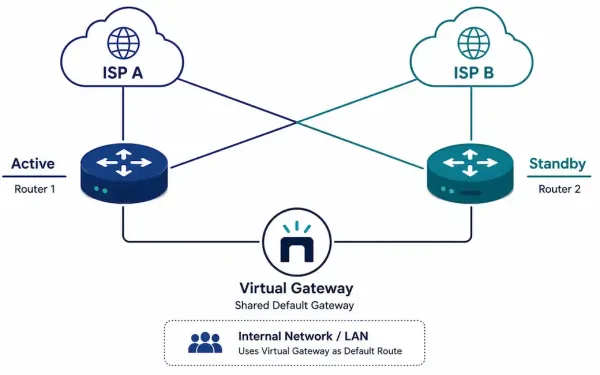
Redundancy and Traffic Management for Small Networks
A single point of failure is exactly what it sounds like: one router, one link, or one ISP connection that, if it fails, takes the whole network down with it. Redundancy eliminates these single points of failure. Traffic management ensures that when bandwidth gets tight, the traffic that actually needs priority — voice, video —...
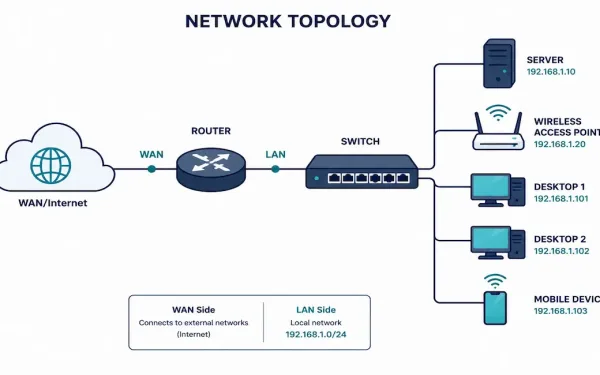
Small Network Topologies: Design, Configuration, and Growth Planning
Most businesses don’t run sprawling enterprise networks — they run small ones: a single router, one or two switches, a handful of access points, and a modest number of users. Understanding how to design, secure, and eventually grow a small network well is one of the most practically useful skills in networking, precisely because it’s...
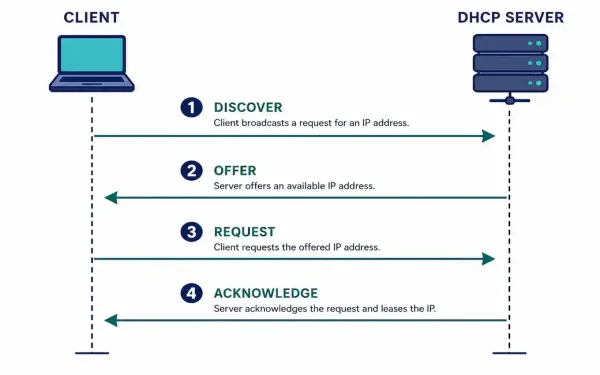
Dynamic Host Configuration Protocol (DHCP): How It Works and How to Configure It
Dynamic Host Configuration Protocol automates one of the most repetitive tasks in networking: assigning IP addresses, subnet masks, default gateways, and DNS servers to every device that joins a network. Without it, every device would need manual configuration — workable for a handful of servers, unmanageable for an office of hundreds of laptops and phones...
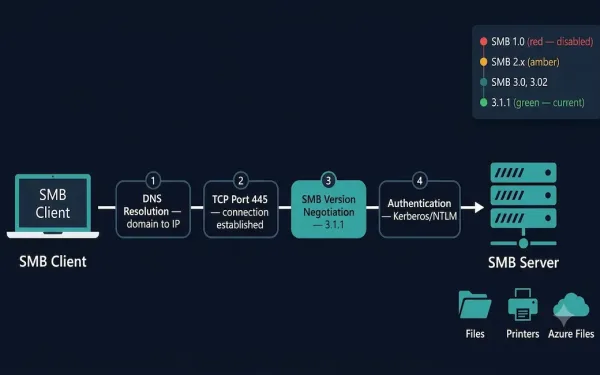
Server Message Block (SMB) Protocol: A Complete Guide
The Server Message Block (SMB) protocol enables hosts to share files, directories, printers, and other resources across a network as if those resources were local. It is a request-response protocol that operates at the Application layer, using TCP port 445 for direct communication. Every message in the SMB protocol follows a standard structure: a fixed-size...
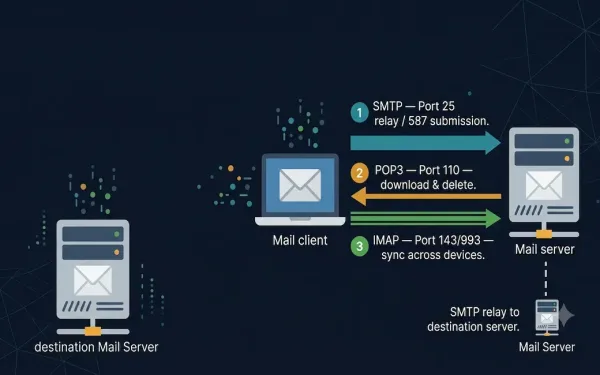
Email Protocols: SMTP, POP3, and IMAP
Email is one of the primary services running on the internet. The email server stores email messages in a database, and email uses a store-and-forward method for sending and holding messages. Email clients communicate with servers running mail services to send and receive email, and the client-connected server in turn communicates with other mail servers...
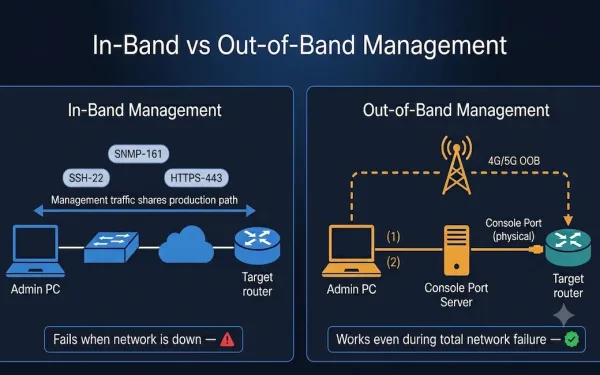
In-Band and Out-of-Band Network Management: A Complete Guide
Network management is critical for businesses, IT teams, and CCNA students learning the fundamentals of how networks are administered. Two fundamental approaches — in-band and out-of-band (OOB) management — determine how administrators monitor, configure, and troubleshoot devices. Understanding when to use each method, how to configure them on Cisco IOS, and how they relate to...
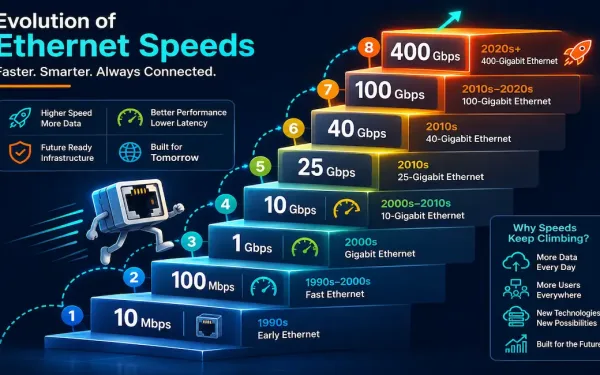
Ethernet Standards Explained: From 10 Mbps to 400 Gbps
Ethernet has been the dominant wired LAN technology for decades, and it’s kept that position by continuously scaling to meet new bandwidth demands rather than being displaced by a competing technology. This guide walks through the major Ethernet standards, from the original 10 Mbps specification through today’s 400 Gigabit Ethernet, what cabling each one needs,...
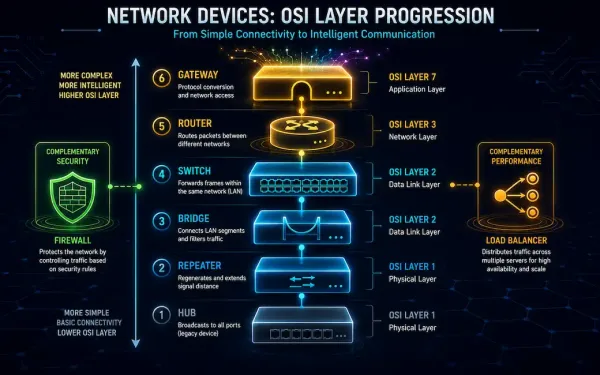
Network Devices: Hubs, Switches, Routers, and More Explained
Network devices are the unsung hardware behind every connection you make. From streaming video to running enterprise infrastructure, they keep data moving, secure, and reliable. Whether you’re studying for CCNA or building out real infrastructure, understanding what each device actually does, and where it fits, is foundational. This guide covers the core network devices, hubs,...