Networking
CCNA tutorials, Cisco guides, and enterprise networking insights for IT professionals.
IPv6 Header and Fields Explained
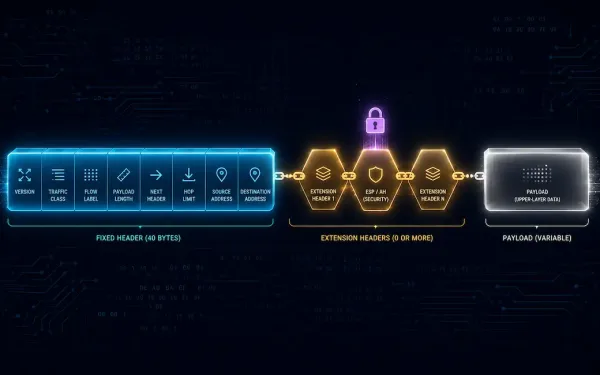
IPv6 is the improved version of the Internet Protocol, and the IPv6 header is one of its most significant improvements over the IPv4 header. The header format has been dramatically simplified: some IPv4 header fields have been removed entirely, others have moved into optional IPv6 Extension Headers, and the fields that remain are streamlined for...
Introduction to IPv6 Addresses
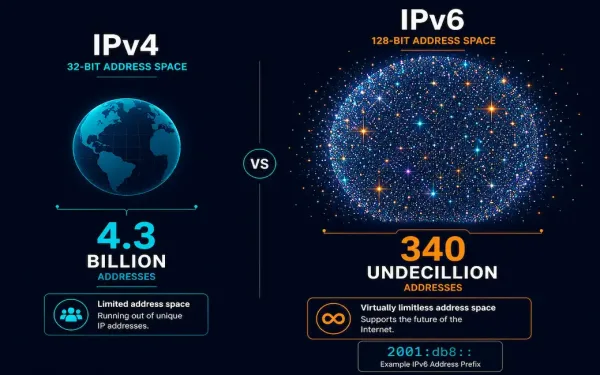
IPv6 was developed by the IETF specifically to overcome IPv4’s limitations, most notably its exhausted address space, while also cleaning up several architectural inefficiencies IPv4 had accumulated over decades of patches and workarounds. This guide covers IPv6’s address structure, its three address types, and the concrete advantages and tradeoffs that come with adopting it. Just...
The Limitations of IPv4: Why the Internet Needed IPv6
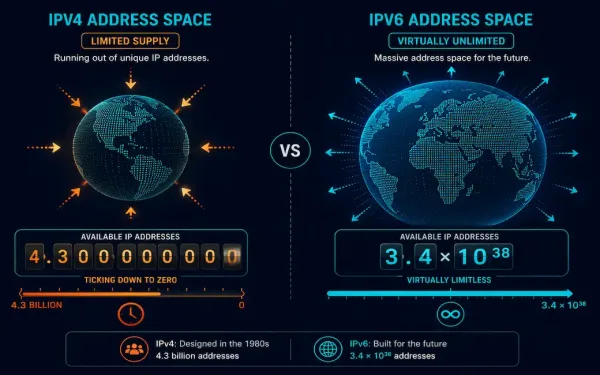
When IPv4 was defined in RFC 791 back in 1981, nobody designing it anticipated that the internet would eventually connect billions of devices worldwide. That original design has been patched and extended repeatedly over the decades since, but several fundamental limitations remain baked into IPv4’s architecture. This guide covers exactly what those limitations are, why...
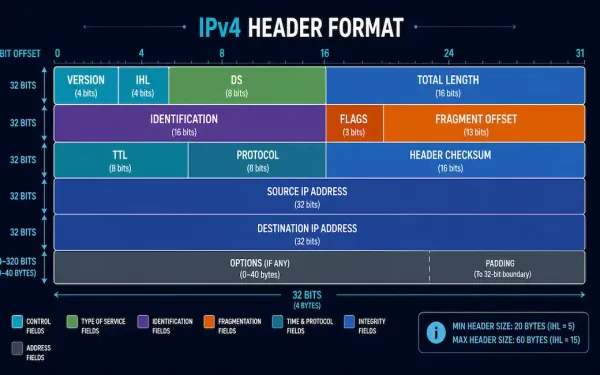
The IPv4 Packet Header: Every Field Explained
The IPv4 packet header is what actually carries a packet across a network: source and destination addressing, fragmentation information, and everything a router needs to make a forwarding decision, all packed into a compact 20-to-60-byte structure. This guide breaks down every field in the header, what each one actually does, and how the whole thing...
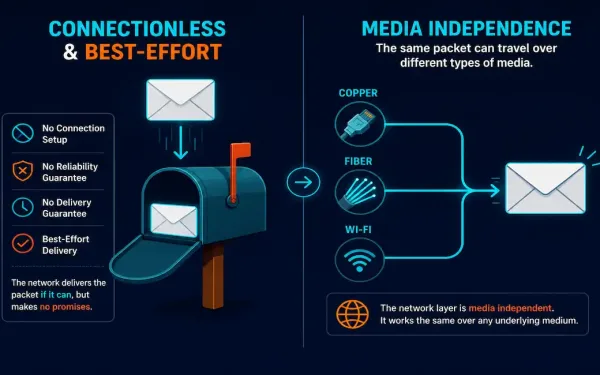
Characteristics of IP: Connectionless, Best-Effort, and Media Independent
The Internet Protocol has three defining characteristics that shape how every IP-based network actually behaves: it’s connectionless, it provides best-effort (unreliable) delivery, and it’s media independent. Understanding these three properties explains a lot about why the internet is architected the way it is, and why so much responsibility for reliability gets pushed up to higher...
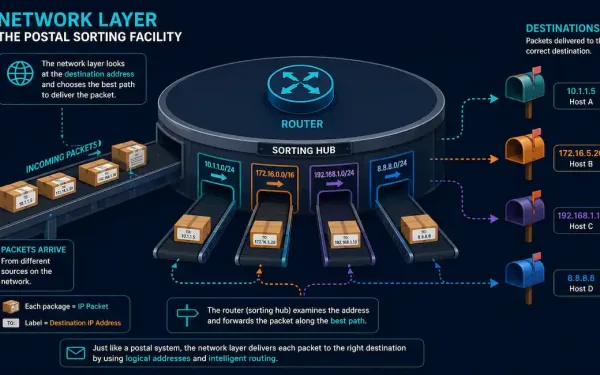
The Network Layer: Functions and Protocols Explained
The network layer, Layer 3 of the OSI model, is responsible for one core job: delivering packets from a source device to a destination device across multiple interconnected networks. It defines the packet structure and the processing needed to carry data from one host to another, routing that data through whatever intermediate networks stand between...
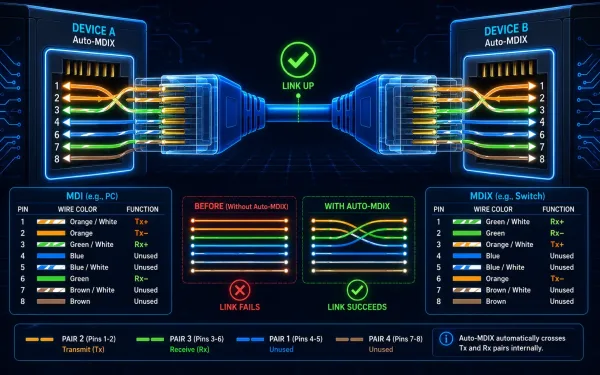
Auto-MDIX on Cisco Devices: How It Works and How to Configure It
The port on a workstation, laptop, or server is called MDI (Media Dependent Interface). The port on a network switch, by contrast, is traditionally MDIX (Media Dependent Interface with Crossover). This distinction exists because someone has to “cross” the transmit and receive pairs somewhere in the connection, and historically, that job fell to whichever end...
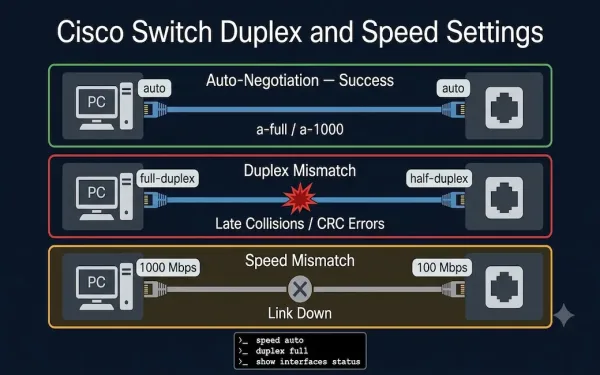
Duplex and Speed Settings on Cisco Switches: Complete Configuration Guide
Duplex and speed settings are the most fundamental configuration parameters for each switch port. By default, Cisco switches auto-negotiate both speed and duplex with connected devices. When this negotiation works correctly, both ends of the link establish the highest common speed and the best available duplex mode without any manual intervention. When it fails —...
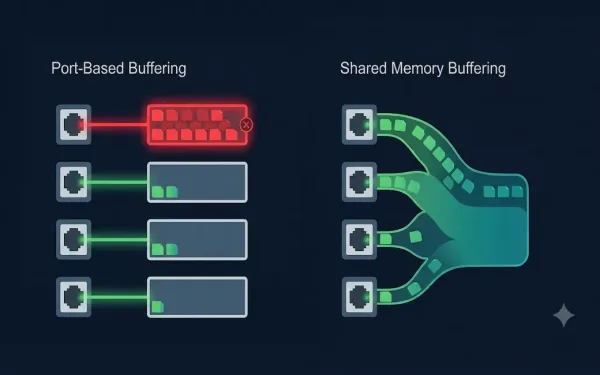
Memory Buffering on Cisco Switches: Techniques and Best Practices
Ethernet switches employ memory buffering to manage data traffic efficiently, ensuring frames are temporarily stored when a destination port faces congestion. Effective buffering is crucial to prevent frame loss, which can degrade network performance, increase latency, and trigger retransmissions, ultimately impacting user experience and reliability. This guide covers the two core buffering methods, advanced techniques...
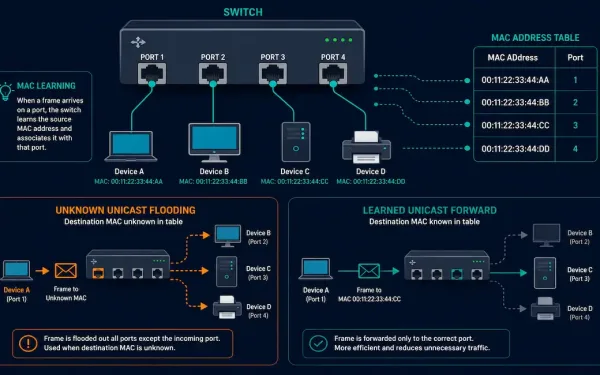
Switching Fundamentals: MAC Address Tables and Frame Forwarding Methods
An Ethernet switch is a Layer 2 device, which means it makes every forwarding decision based on MAC addresses, entirely unaware of what protocol is actually carried inside the frame’s payload, whether that’s an IPv4 packet, an IPv6 packet, or something else entirely. This guide covers exactly how a switch builds and uses its MAC...