CCNA
Cisco Certified Network Associate certification resources
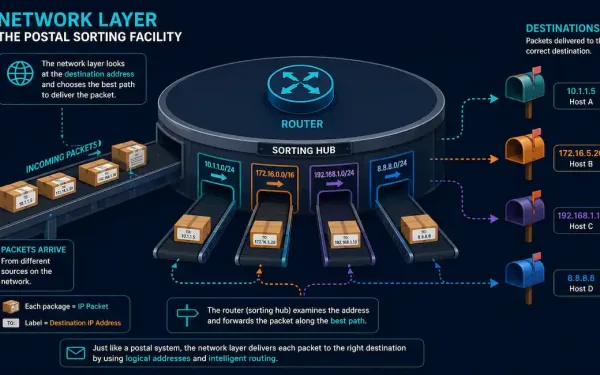
The Network Layer: Functions and Protocols Explained
The network layer, Layer 3 of the OSI model, is responsible for one core job: delivering packets from a source device to a destination device across multiple interconnected networks. It defines the packet structure and the processing needed to carry data from one host to another, routing that data through whatever intermediate networks stand between...
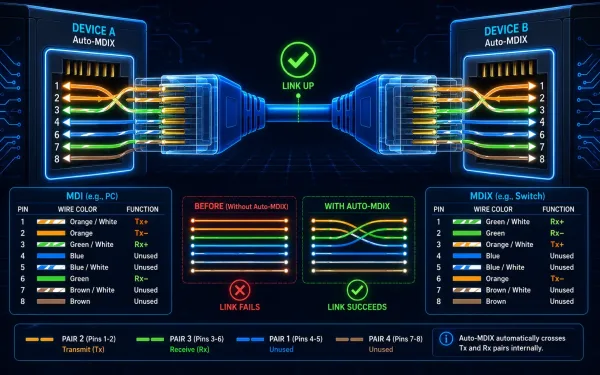
Auto-MDIX on Cisco Devices: How It Works and How to Configure It
The port on a workstation, laptop, or server is called MDI (Media Dependent Interface). The port on a network switch, by contrast, is traditionally MDIX (Media Dependent Interface with Crossover). This distinction exists because someone has to “cross” the transmit and receive pairs somewhere in the connection, and historically, that job fell to whichever end...
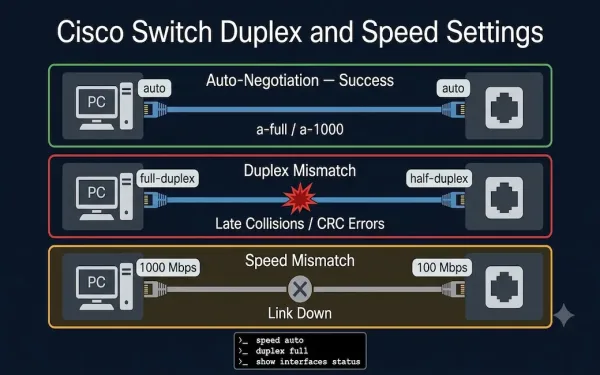
Duplex and Speed Settings on Cisco Switches: Complete Configuration Guide
Duplex and speed settings are the most fundamental configuration parameters for each switch port. By default, Cisco switches auto-negotiate both speed and duplex with connected devices. When this negotiation works correctly, both ends of the link establish the highest common speed and the best available duplex mode without any manual intervention. When it fails —...
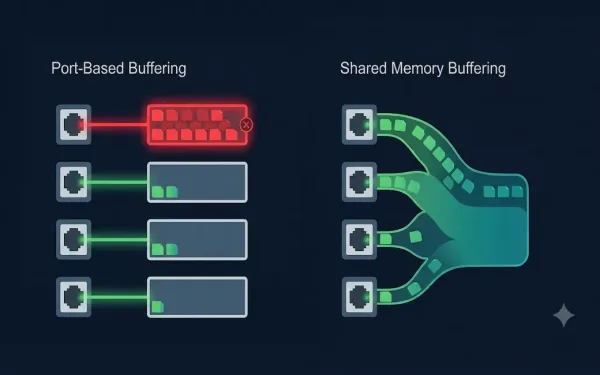
Memory Buffering on Cisco Switches: Techniques and Best Practices
Ethernet switches employ memory buffering to manage data traffic efficiently, ensuring frames are temporarily stored when a destination port faces congestion. Effective buffering is crucial to prevent frame loss, which can degrade network performance, increase latency, and trigger retransmissions, ultimately impacting user experience and reliability. This guide covers the two core buffering methods, advanced techniques...
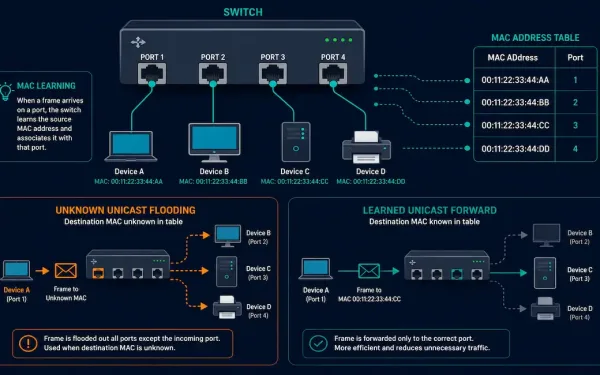
Switching Fundamentals: MAC Address Tables and Frame Forwarding Methods
An Ethernet switch is a Layer 2 device, which means it makes every forwarding decision based on MAC addresses, entirely unaware of what protocol is actually carried inside the frame’s payload, whether that’s an IPv4 packet, an IPv6 packet, or something else entirely. This guide covers exactly how a switch builds and uses its MAC...
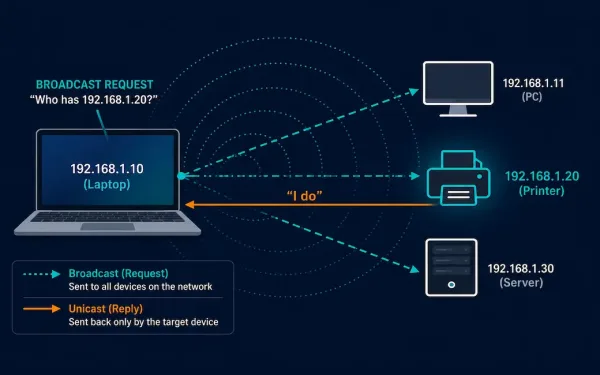
Address Resolution Protocol (ARP) Explained
Every device on a network has both an IP address and a MAC address, and something has to bridge the two. That’s the job of the Address Resolution Protocol (ARP): mapping a known IP address to the MAC address a device actually needs to build an Ethernet frame. This guide covers exactly how that resolution...
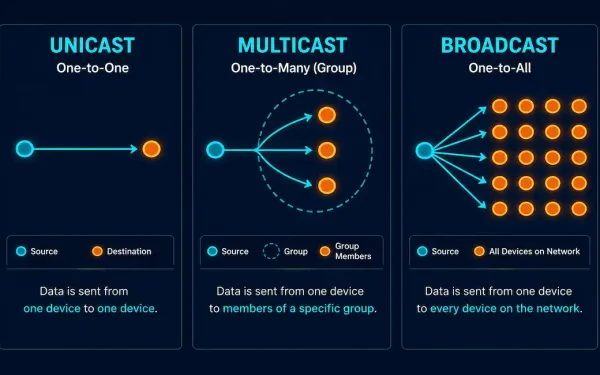
Unicast, Multicast, and Broadcast Addresses Explained
Every packet on a network needs a way to specify who should receive it. Networks handle this through three distinct address types: unicast for one-to-one delivery, multicast for one-to-a-group delivery, and broadcast for one-to-everyone delivery. This guide covers exactly how each one works at both the IP and MAC address level, and where you’ll actually...
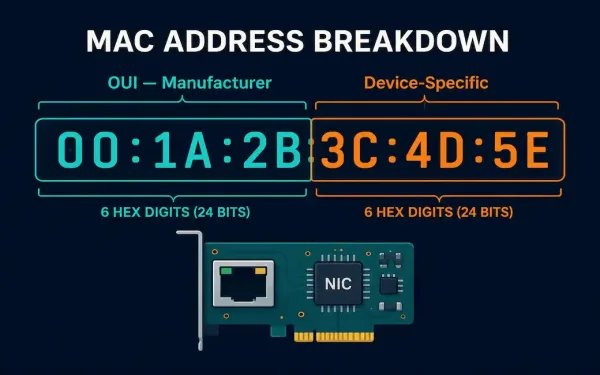
MAC Addresses Explained: Structure, Format, and How to Find Yours
A MAC address, short for Media Access Control address, is a worldwide unique identifier assigned to a network interface controller. It’s also called a hardware address or physical address, and it’s what allows communication within a local network segment. Most IEEE 802 network technologies, including Ethernet, Wi-Fi, and Bluetooth, rely on MAC addresses for this...
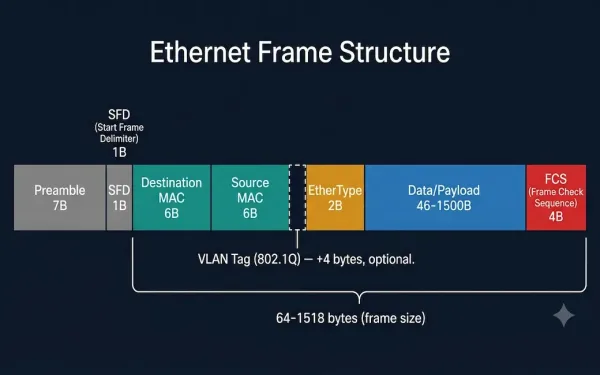
Ethernet Frame Structure: IEEE 802.3 and Ethernet II Fields Explained
The Ethernet frame structure is the backbone of wired networking, enabling reliable data transfer across everything from small office LANs to hyperscale data centers. This guide explores each component of an Ethernet frame, their exact byte sizes, their roles, and how VLAN tagging extends the basic structure for modern segmented networks. Overview of Ethernet Frame...
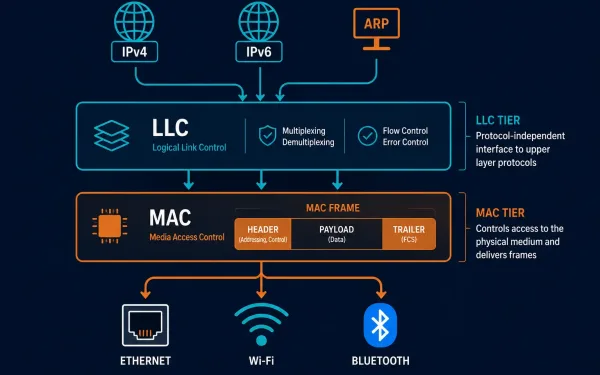
LLC and MAC Sublayers: What Each One Actually Does
The Data Link Layer, Layer 2 of the OSI model, splits into two distinct sublayers, and understanding exactly where the line falls between them clears up a lot of confusion about how Layer 2 actually works. The Logical Link Control (LLC) sublayer talks to the Network Layer above it; the Media Access Control (MAC) sublayer...