CCNA
Cisco Certified Network Associate certification resources
How to Verify Cisco Router Interface Settings
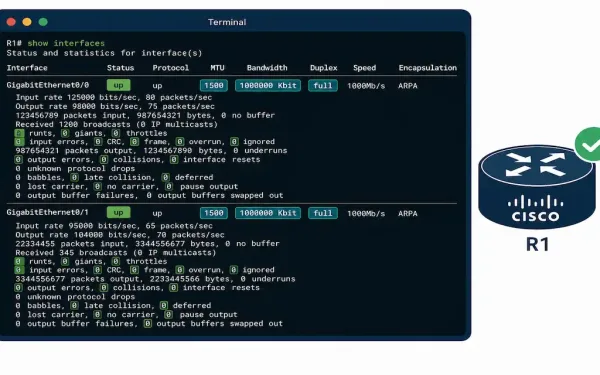
A misconfigured interface rarely announces itself clearly — a duplex mismatch shows up as vague “slow network” complaints, not an obvious error message. Systematically verifying interface settings is what turns troubleshooting from guesswork into a methodical process, and it’s a skill that matters just as much for confirming a change worked as it does for...
How to Configure an IPv4 Loopback Interface
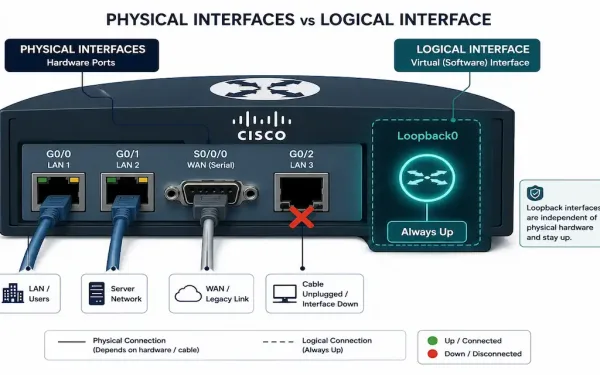
A loopback interface is one of the simplest things you can configure on a Cisco router, and one of the most quietly important. It has no physical hardware behind it, can’t be unplugged, and stays up as long as the router itself is running — which is exactly why it’s the standard choice for a...
How to Enable an IP Address on a Network Switch
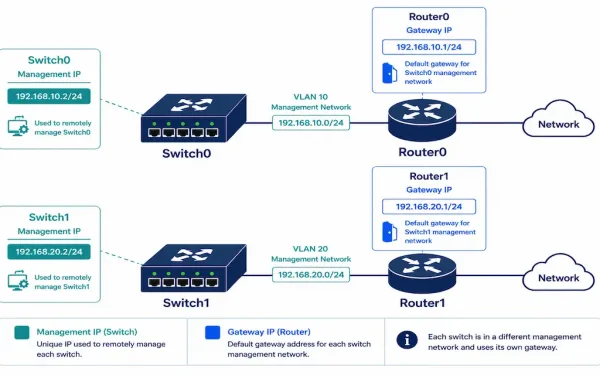
Switches operate at Layer 2 — forwarding frames based on MAC addresses, with no inherent concept of IP addressing at all. So how do you SSH into one, or manage it through a web interface? The answer is a Switched Virtual Interface (SVI): a virtual Layer 3 interface that gives an otherwise Layer 2-only device...
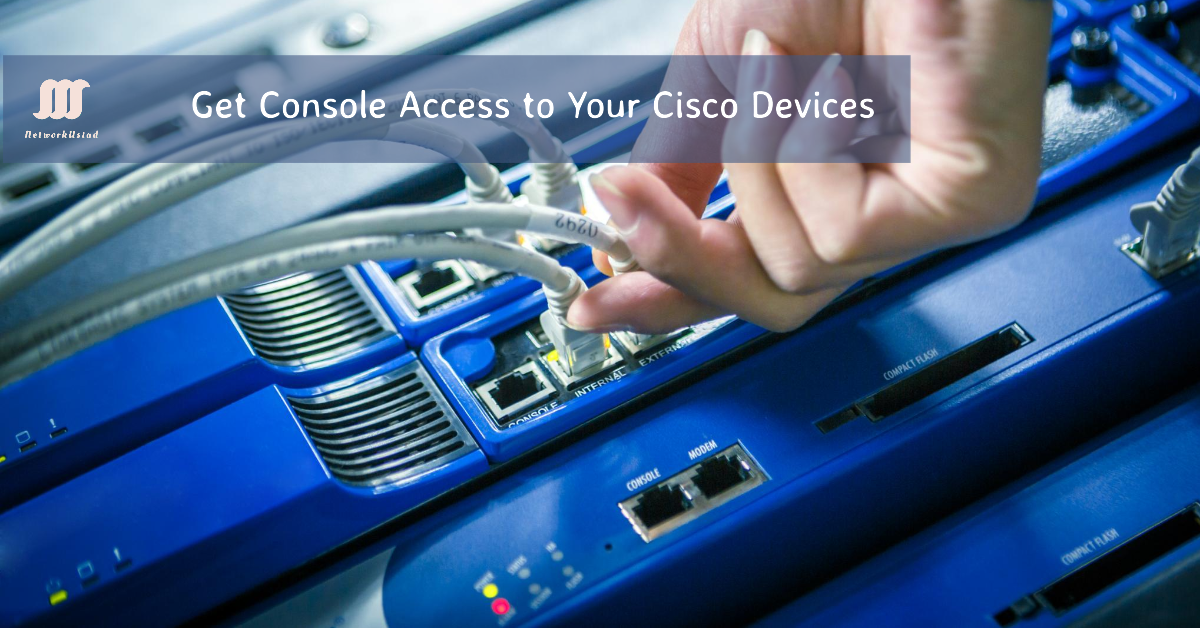
What is Console Access to Cisco Devices
Console Access is an essential topic for networking students, so I will explain console access to Cisco devices in this lesson. All Cisco routers and switches have a console port, the management interface. It connects a computer directly to a router or switch and manages it. The console port is also used for initial configuration....
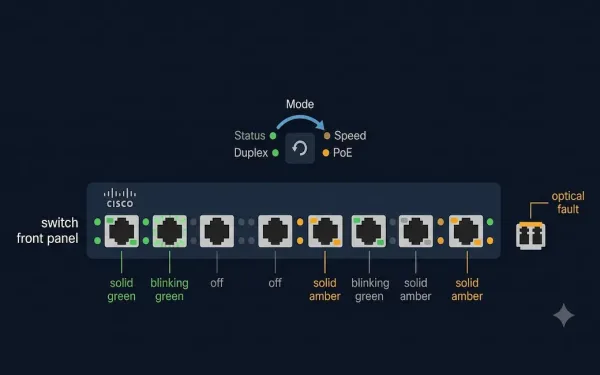
Introduction to Status LEDs of Ethernet and Network Devices
Device status LEDs are essential tools for CCNA and CCNP students, offering quick visual cues to diagnose network issues without needing to open a CLI session. These indicators on NICs, hubs, routers, and switches help troubleshoot connectivity, performance, and faults efficiently, often catching a physical-layer problem before you’d otherwise notice it in monitoring software. This...
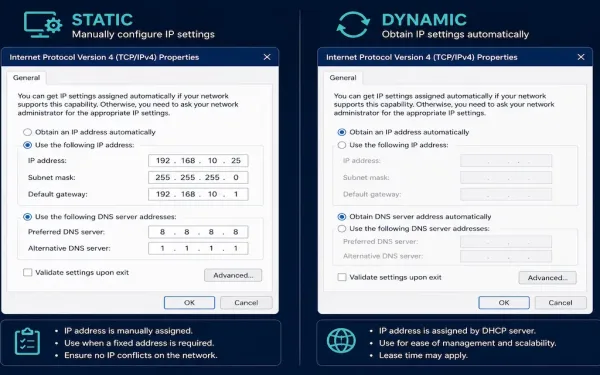
How to Assign an IP Address on a Windows PC
Every host on a network needs an IP address, and there are exactly two ways to give it one: type it in manually (static) or let a DHCP server assign it automatically (dynamic). Knowing both isn’t just a CCNA exam requirement — it’s the first troubleshooting question worth asking whenever a Windows machine can’t reach...
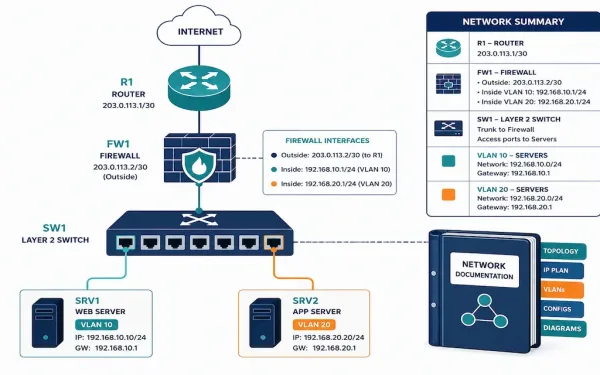
Network Documentation: A Practical Guide for CCNA and CCNP
Undocumented networks work fine right up until something breaks, and then every minute spent reverse-engineering what should already be written down is a minute of downtime that didn’t need to happen. Network documentation is the difference between a five-minute fix and an hour of guessing, and it’s a skill that matters just as much in...
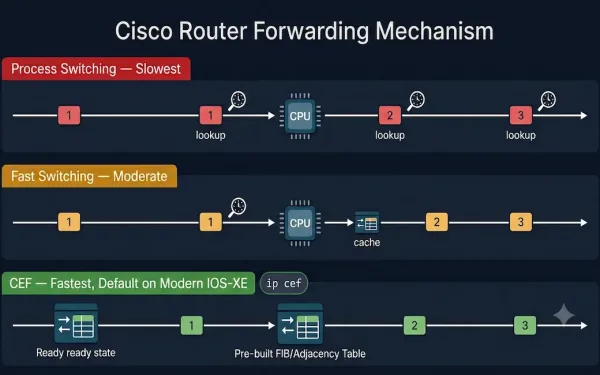
Cisco Router Forwarding Mechanisms: Process Switching, Fast Switching, and CEF
Understanding Cisco router forwarding mechanisms is a cornerstone of networking for CCNA and CCNP students. Routers, the backbone of network connectivity, rely on efficient packet-forwarding mechanisms to direct traffic toward its destination. Cisco routers support three primary methods, Process Switching, Fast Switching, and Cisco Express Forwarding (CEF), each with unique characteristics affecting performance, scalability, and...
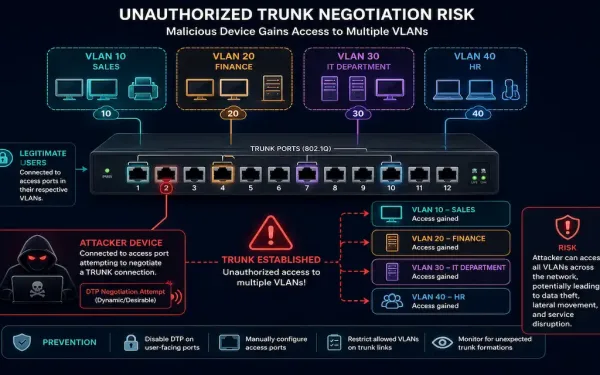
VLAN Attacks: How They Work and How to Defend Against Them
Trunk ports carry traffic for multiple VLANs across a single physical link by default, which is exactly what makes VLANs so convenient to administer — and exactly what creates an attack surface if that trunk configuration isn’t locked down properly. Understanding how these attacks actually work is what makes the standard mitigations make sense, rather...
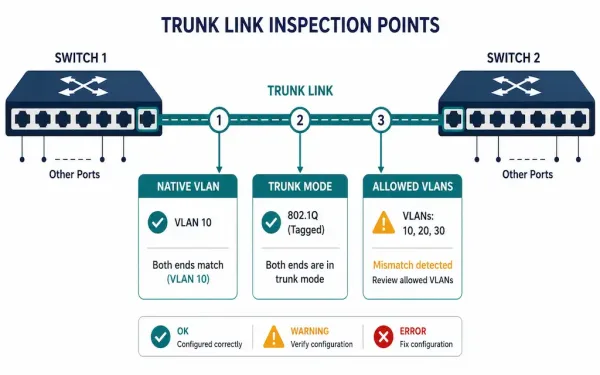
Trunk Link Problems and Troubleshooting
Trunk links carrying multiple VLANs between switches fail in a small number of well-known ways, and almost all of them come down to a mismatch between what’s configured on one end and what’s configured on the other. Knowing the standard troubleshooting order — native VLAN, then trunk mode, then allowed VLAN list — turns a...