Networking
CCNA tutorials, Cisco guides, and enterprise networking insights for IT professionals.
Framing in the Data Link Layer
Data-link layer framing is a critical process in networking that enables reliable data transmission across diverse media. The data-link layer takes packets from the Network Layer and encapsulates them into frames, the fundamental data units for network communication. If a packet is too large for a single frame, it may be divided into smaller frames...
Carrier Sense Multiple Access (CSMA) Explained
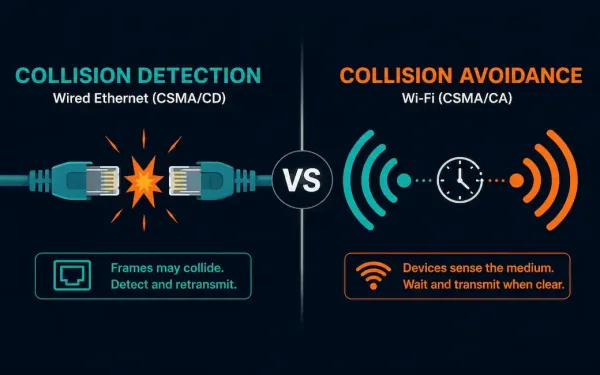
Carrier Sense Multiple Access (CSMA) is the family of media access control protocols behind both Ethernet’s collision handling and Wi-Fi’s collision avoidance. The core idea is simple: before a device transmits, it listens to the shared medium first, checking whether it’s clear. What each device does next, detect a collision after it happens, or actively...
Understanding Network Topology: A Comprehensive Guide
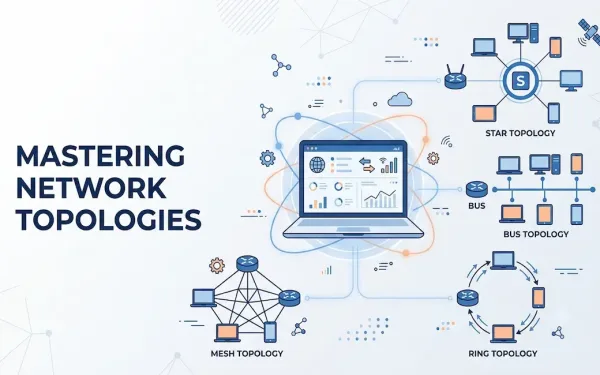
Network topology defines the schematic arrangement of devices, nodes, and connections within a computer network. It determines how data flows between devices, directly affecting performance, scalability, and reliability. Topologies are broadly categorized into physical network topology, the tangible layout of cables and devices, and logical network topology, the virtual path that data actually travels. Understanding...
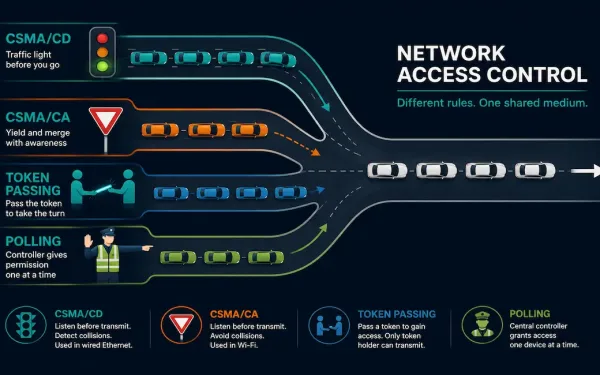
Media Access Control Methods Explained: CSMA/CD, CSMA/CA, Token Passing, and Polling
Whenever more than one device shares a physical network medium, something has to decide who gets to transmit and when. That’s the job of a Media Access Control (MAC) method: a set of rules, implemented at the data link layer, that governs how devices gain and control access to shared network media. Without one, two...
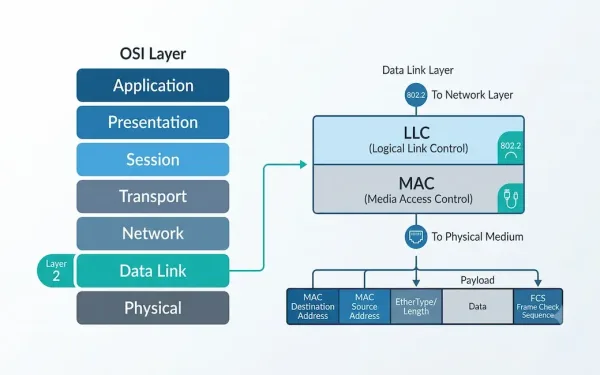
What Is the Data Link Layer? A Complete Guide to OSI Layer 2
The Data Link Layer is the second layer of the OSI model, and it plays a critical role in how devices communicate across a network. Sitting between the physical layer below and the network layer above, it is responsible for reliable node-to-node delivery of data over a physical link. This guide explains what the Data...
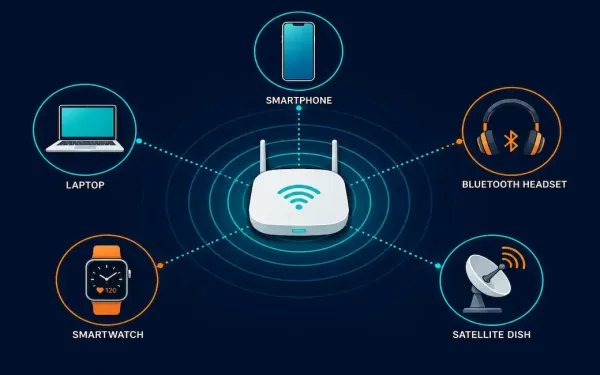
Wireless Media Explained: Wi-Fi, Bluetooth, WiMAX, and Cellular
Wireless media carries data through radio frequency (RF) signals instead of a physical cable. It’s the technology behind Wi-Fi, Bluetooth, cellular networks, satellite internet, and dozens of other everyday connections, from cordless keyboards to GPS receivers. This guide covers how wireless media actually works at the physical and data link layers, the main standards you’ll...
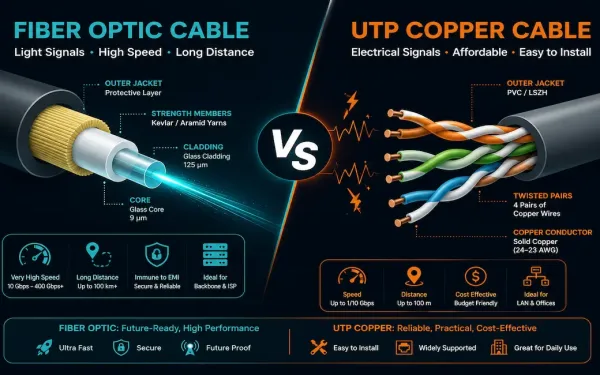
Fiber vs Copper Cabling: How to Choose the Right One
Fiber and copper both move data from one point to another, but they do it in fundamentally different ways, and each suits a different set of needs. Choosing between them isn’t about which is universally “better” — it’s about matching the medium to the distance, environment, and budget of the specific run you’re actually installing....
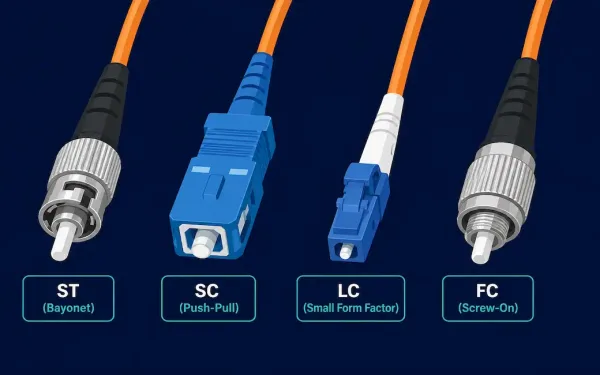
Fiber Optic Connectors Explained: ST, SC, LC, and FC Types
Fiber optic connectors terminate the ends of an optical fiber and let it plug into a port, patch panel, or another fiber run. Dozens of connector types exist, but the differences that actually matter for day-to-day work come down to three things: ferrule size, mating mechanism, and how much loss the connector introduces at the...
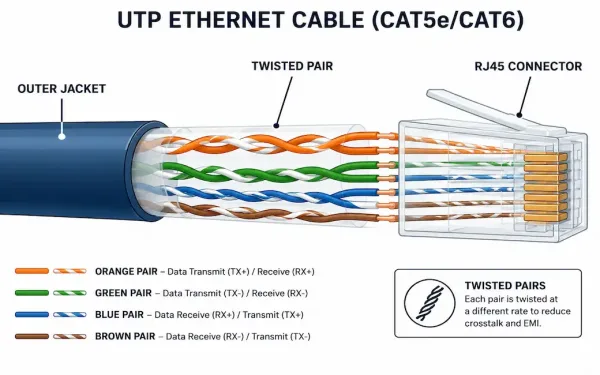
Unshielded Twisted Pair (UTP) Cabling Explained
Unshielded Twisted Pair, or UTP, is the cabling behind most Ethernet networks and telephone systems in use today. It’s lightweight, inexpensive, and easy to install, which is exactly why it became the default choice for LAN cabling decades ago and still is. This guide covers how UTP actually works, what each cable category really supports,...
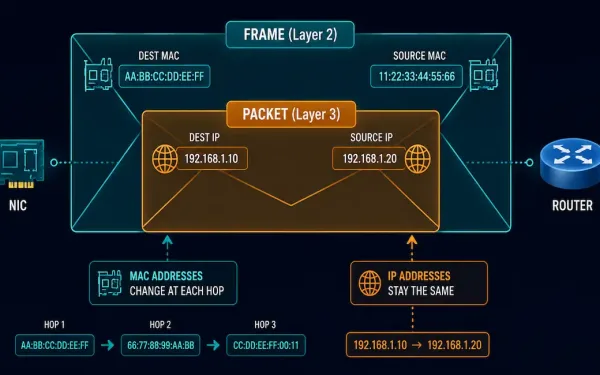
Data Link Layer and Network Layer Addresses Explained
Every packet that crosses a network carries two different kinds of addresses at once. One address stays the same for the whole trip. The other changes at every single hop. Mixing these two up is one of the most common sources of confusion for anyone studying networking or working toward CCNA. This guide breaks down...