CCNA
Cisco Certified Network Associate certification resources
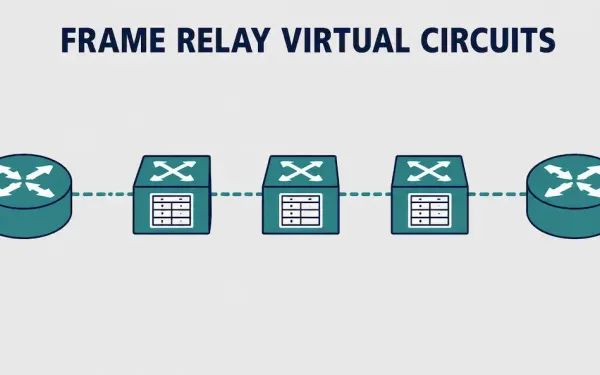
Frame Relay Virtual Circuits (VCs): PVCs, SVCs, and DLCIs Explained
We’ve already covered the fundamentals of Frame Relay as a WAN encapsulation protocol. This guide goes deeper into the mechanism that makes Frame Relay work: the virtual circuit. Frame Relay provides connection-oriented data link layer communication specifically through virtual circuits, and understanding exactly how those circuits get established, identified, and torn down is what separates...
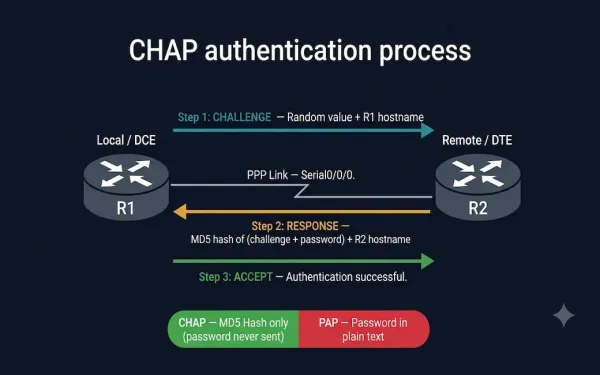
How to Configure Challenge Handshake Authentication Protocol (CHAP)
Challenge Handshake Authentication Protocol is the standard PPP authentication method for securing point-to-point WAN links on Cisco routers. It authenticates the remote router without transmitting the password in plain text, protecting the link against replay attacks through a randomly generated challenge value that changes with each authentication attempt. This guide covers how it works, its...
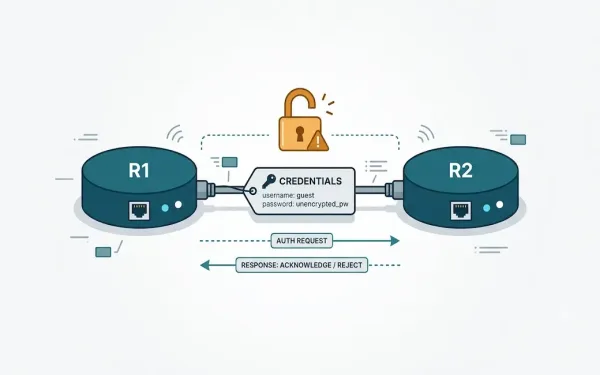
Password Authentication Protocol (PAP): How It Works, Configuration, and Why It’s Insecure
Point-to-Point Protocol (PPP) supports several optional features, and one of the most important is authentication. Authentication lets a router verify the identity of the device on the other end of a link before allowing traffic to pass. By default, PPP authentication is not enabled, but you can turn it on using one of two protocols:...
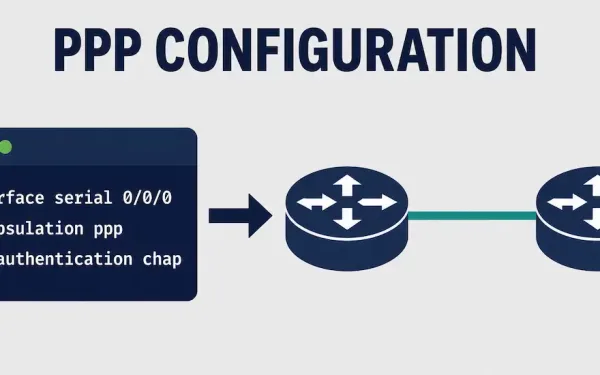
PPP Configuration: A Complete Cisco IOS Guide
Remember that HDLC is the default encapsulation protocol on Cisco router serial interfaces. If PPP configuration isn’t explicitly applied, the default HDLC encapsulation remains in use. To set PPP as the encapsulation method on a serial interface, PPP must be configured directly on that interface. Consider a simple topology: two routers, Router1 and Router2, connected...
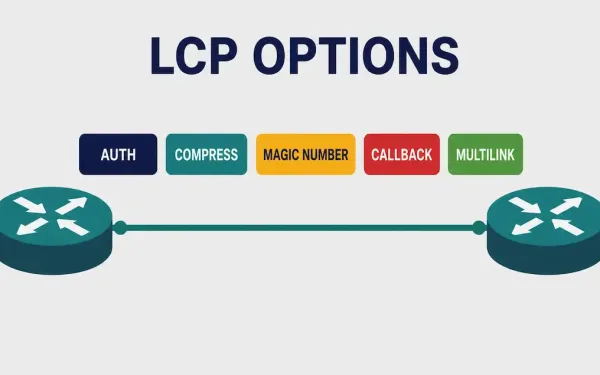
LCP Options: PPP’s Configurable Link Parameters Explained
PPP supports several link options that can be configured optionally during link setup: authentication using PAP or CHAP, compression using either Stacker or Predictor, and Multilink, which combines two or more channels to increase available WAN bandwidth. To negotiate these options, LCP link-establishment frames carry option information in the Data field of the LCP frame....
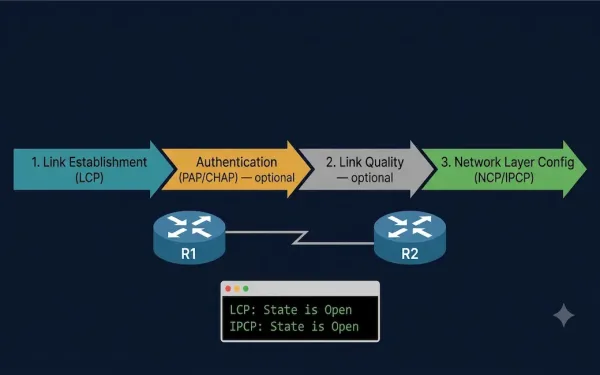
PPP Session: LCP Phases, Packet Structure, and Frame Types
When two devices are first turned on, there is no active link-layer connection between them. Once the physical connection is made, the devices can begin establishing a PPP (Point-to-Point Protocol) session. There are three phases to establishing a PPP session: Phase 1: Link establishment and configuration negotiation Before PPP exchanges any network layer datagrams, such...
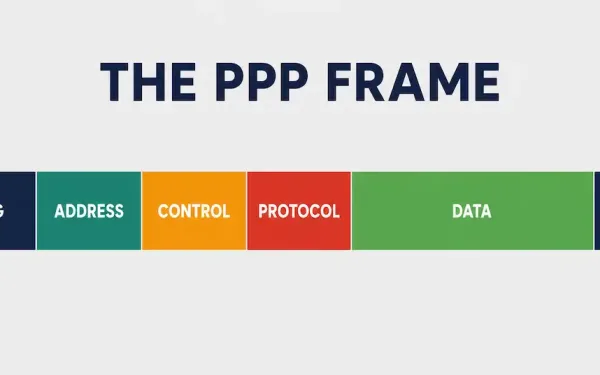
PPP Components: Layered Architecture and Frame Structure Explained
A layered architecture is a logical model that helps different parts of a communication system work together. PPP’s layered model maps reasonably well onto the OSI model: both share the same physical layer, though PPP distributes the work of its Link Control Protocol (LCP) and Network Control Protocol (NCP) differently than OSI’s strict layer boundaries....
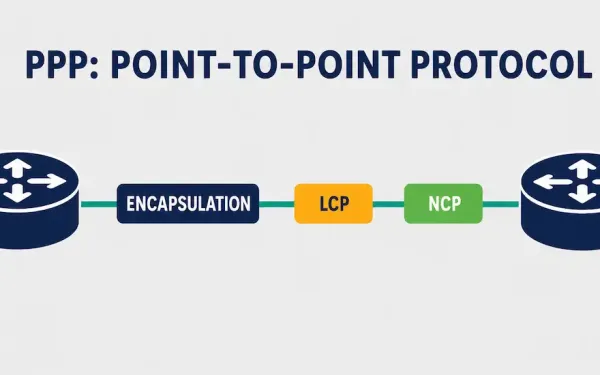
PPP Overview: The Point-to-Point Protocol Explained
PPP (Point-to-Point Protocol) is a WAN encapsulation protocol developed in the early 1990s as a successor to the older Serial Line Internet Protocol (SLIP). It’s an open standard, meaning the protocol can be used consistently across equipment from different vendors — a significant advantage over proprietary alternatives. PPP can run over a remarkably wide range...
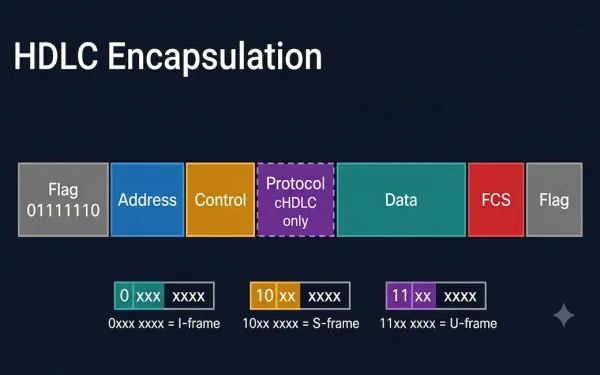
HDLC Encapsulation Protocol
HDLC is the default encapsulation protocol on point-to-point connections, dedicated links, and circuit-switched links when both ends of the link are Cisco devices. It is a synchronous Data Link layer bit-oriented protocol, originally developed from IBM’s Synchronous Data Link Control (SDLC), and later standardized by ISO as ISO/IEC 13239. HDLC provides both connection-oriented and connectionless...
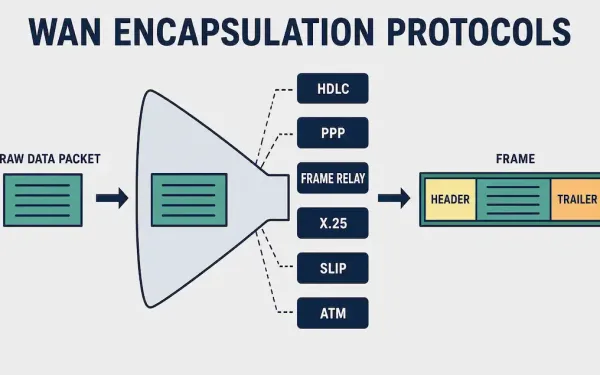
WAN Encapsulation Protocols: HDLC, PPP, Frame Relay, X.25, SLIP, and ATM
The network layer passes data down to the data link layer for transmission over the physical layer. The data link layer creates frames by adding the necessary checks and controls around that network layer data — a process called encapsulation. On a router’s serial interface, encapsulation must be explicitly configured to guarantee both ends of...