
CCNA
Cisco Certified Network Associate certification resources
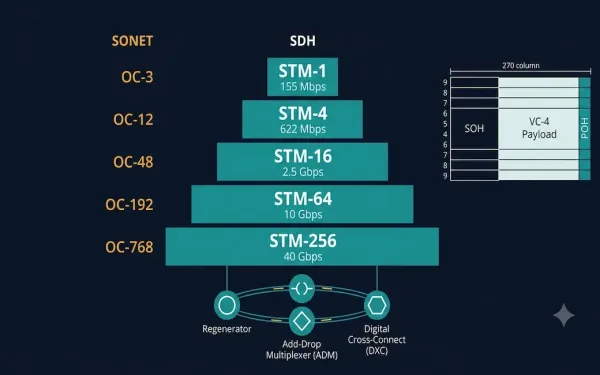
What Is SDH? Synchronous Digital Hierarchy Explained
SDH — Synchronous Digital Hierarchy — is the ITU-T standard for multiplexing and transporting digital signals over optical fibre networks. It defines a hierarchy of data rates, a frame structure for organizing those signals, and a set of management and overhead mechanisms that make large-scale optical transport networks manageable and resilient. SDH is interoperable with...

What Is SONET? Synchronous Optical Networking Explained
Synchronous Optical Networking is a standardized protocol for transmitting large volumes of data over long distances across fiber-optic media. For decades it has been a backbone technology of the global telecommunications network, carrying voice, data, and video traffic between cities and across continents on high-speed optical links. SONET was developed in the mid-1980s and standardized...
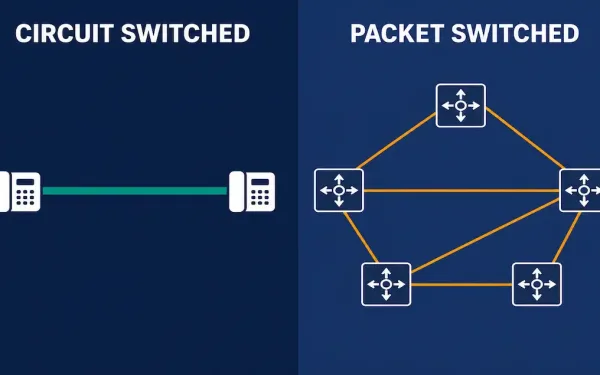
Circuit Switched vs Packet Switched: WAN Technologies Explained
Every wide area network connection relies on one of two switching methods: circuit switching or packet switching. The earlier article on WAN devices covered the hardware routers and modems use to reach a WAN, but that hardware only tells half the story. The switching method chosen by your WAN access technology determines how data actually...
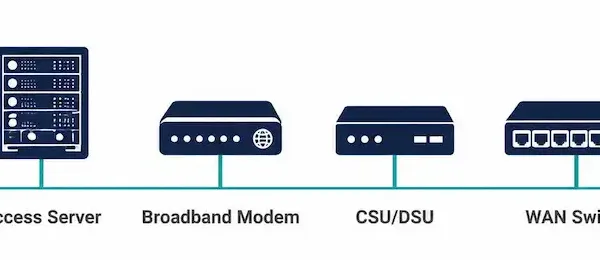
WAN Devices: Roles, Verification, and Selection
A WAN connection rarely involves just a router. Between the customer’s equipment and the provider’s core, a small set of specialized devices each handle a distinct job — converting signals, providing clocking, switching carrier traffic, or forwarding at the speeds a provider backbone demands. Knowing what each device actually does, and how to verify it’s...
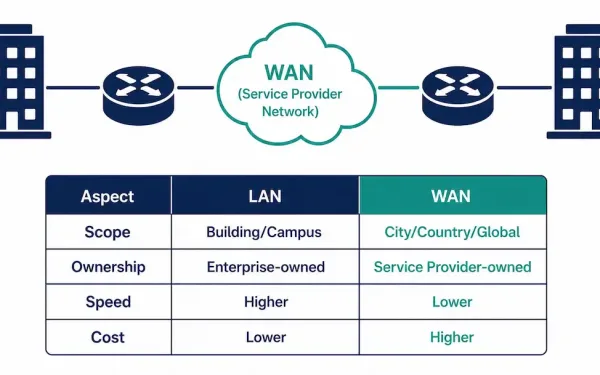
Introduction to WAN Technologies
A LAN connects devices within a single building or campus. The moment you need to connect that LAN to another one across a city, a country, or the globe, you’re in WAN territory — a fundamentally different set of technologies, ownership models, and design trade-offs. Wide Area Networks are what make hybrid work, branch offices,...
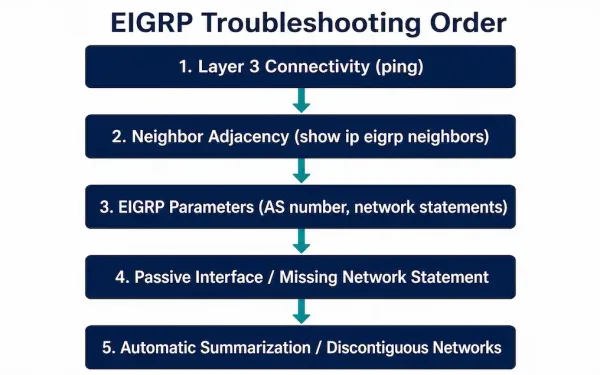
Basic EIGRP Troubleshooting Commands
EIGRP troubleshooting comes down to a small, repeatable set of commands, applied in a logical order — from basic connectivity, through parameter matching, to specific configuration issues like passive interfaces and automatic summarization. Knowing this order well enough to work through it without hesitation is what separates methodical troubleshooting from guessing. This guide walks through...
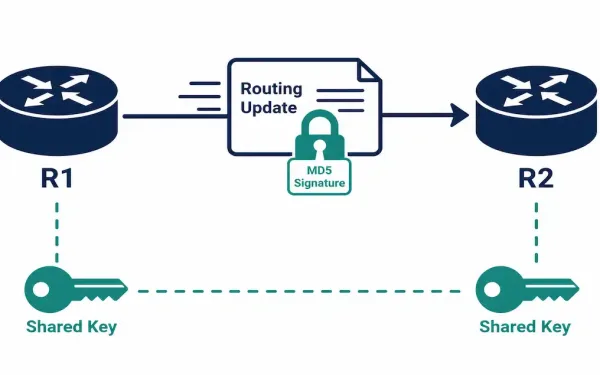
Routing Protocol Authentication with MD5: Configuration and Modern Considerations
An unauthenticated routing protocol will accept updates from anything claiming to be a legitimate neighbor, which is exactly the gap an attacker needs to inject false routing information, redirect traffic, or trigger a denial-of-service condition. Authentication closes this gap by requiring routers to prove they possess a shared secret before their updates are trusted, and...
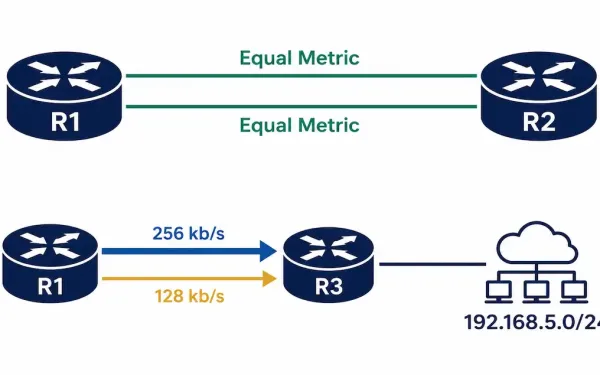
How to Configure EIGRP Load Balancing for IPv4
When a router has more than one valid path to the same destination, EIGRP doesn’t have to pick just one and ignore the rest. It can install multiple paths and split traffic across them — either paths with genuinely equal cost, or, uniquely among major routing protocols, paths with different costs entirely. Both are configurable,...
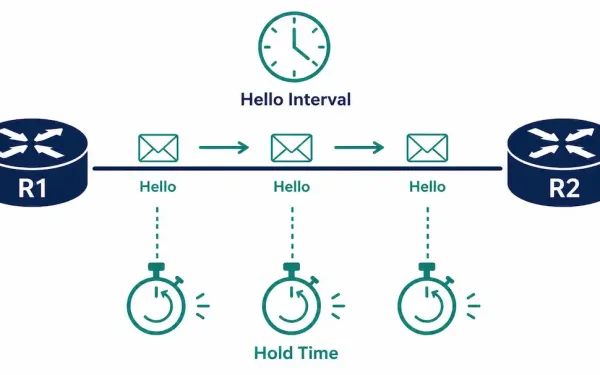
EIGRP Hello Protocol: Timers, Configuration, and Troubleshooting
EIGRP neighbors don’t just form a relationship once and assume it stays healthy forever — they actively check in with each other on a regular schedule, using small Hello packets sent at a configurable interval. If those check-ins stop arriving, the neighbor relationship gets torn down, and every route learned through it disappears from the...
How to Configure EIGRP Bandwidth Utilization
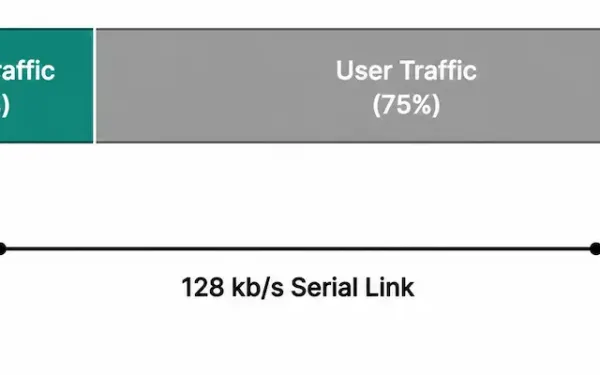
EIGRP doesn’t just calculate reachability — it also has to avoid consuming so much link bandwidth with its own routing traffic that it starves the actual user data the network exists to carry. By default, EIGRP caps itself at using half of an interface’s available bandwidth for its own hello packets and updates, but that...