
CCNA
Cisco Certified Network Associate certification resources
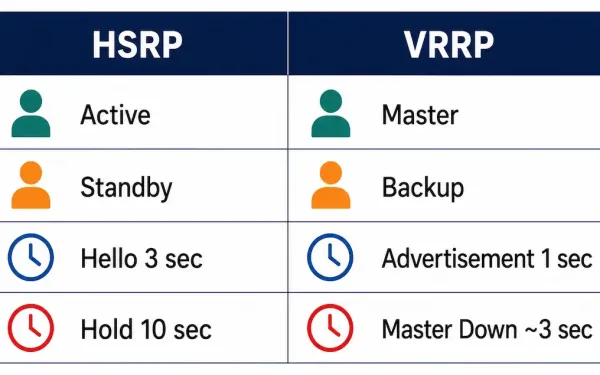
How to Configure VRRP: The Open-Standard Alternative to HSRP
VRRP (Virtual Router Redundancy Protocol) does the same job as HSRP — multiple routers sharing a virtual IP address so hosts never need to know which physical device is actually forwarding their traffic — but it’s an open IETF standard (RFC 3768) rather than a Cisco-proprietary protocol. If a network mixes equipment from different vendors,...
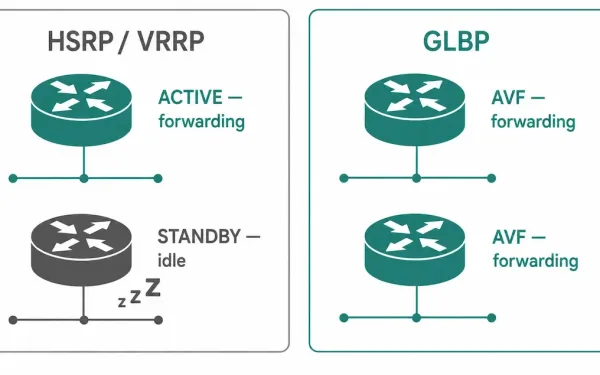
How to Configure GLBP: Active-Active Gateway Load Balancing
HSRP and VRRP both solve gateway failover the same way: one router is active, everything else sits idle until it fails. GLBP (Gateway Load Balancing Protocol), Cisco’s own extension, was built specifically to fix that waste — it lets every router in the group actively forward traffic simultaneously, not just the one that happens to...
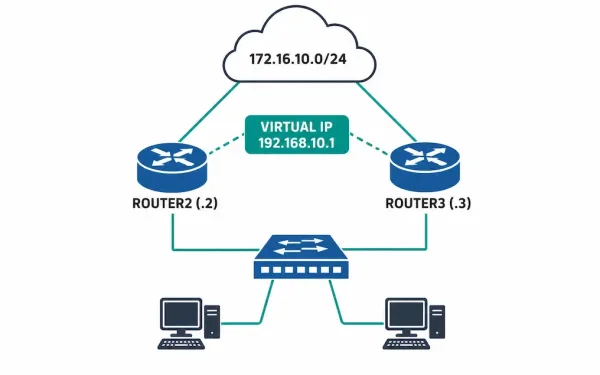
How to Configure HSRP: Step-by-Step Guide
HSRP (Hot Standby Router Protocol) is Cisco’s proprietary First Hop Redundancy Protocol, designed for transparent failover of the first-hop device hosts use as their default gateway. It lets two or more routers share one virtual IP and virtual MAC address, as covered mechanically in the router redundancy article, with exactly one router actively forwarding traffic...
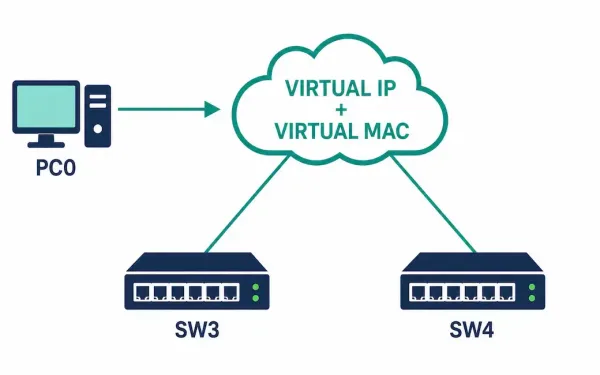
Router Redundancy: How Virtual Routers Actually Work
The previous article in this series covered why a single static default gateway is a network’s hidden single point of failure. This one covers the mechanism that actually fixes it: the virtual router. A virtual router isn’t a separate physical device. It’s a shared identity — one IP address and one MAC address — that...
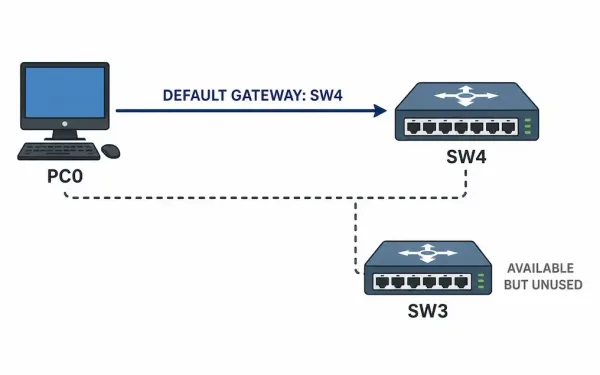
Default Gateway Limitations: Why One Static Gateway Isn’t Enough
A host doesn’t route. It knows its own subnet, and for everything outside that subnet, it sends traffic to exactly one configured address: its default gateway. That single point of dependency is the limitation this article covers — and understanding it is what motivates every First Hop Redundancy Protocol (FHRP) that exists, from HSRP to...
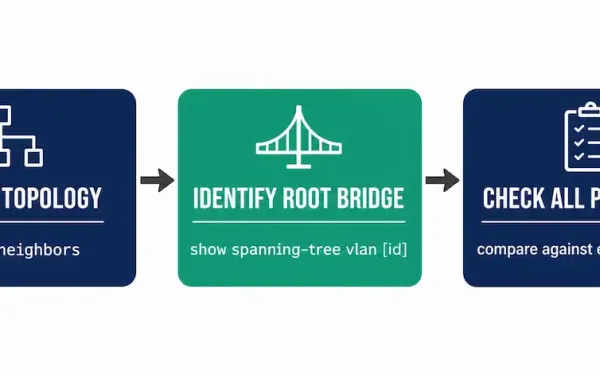
Troubleshooting Spanning-Tree Protocol: A Practical Workflow
Spanning tree topology is usually planned as part of the network design — root bridge placement, priority values, and which links should end up blocked. But actual switches on actual cabling don’t always match that plan, especially after months or years of undocumented changes. Troubleshooting STP starts with a simple question: does the network’s actual...
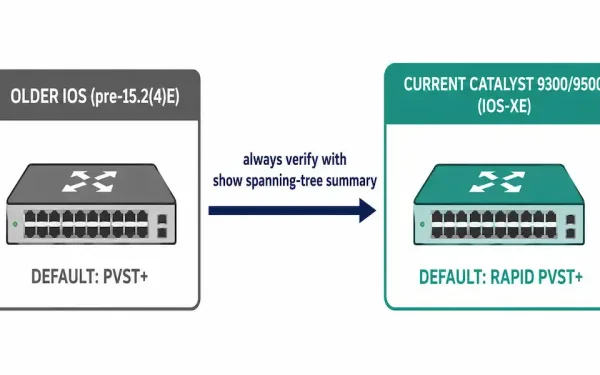
How to Configure Spanning-Tree Mode: Rapid PVST+
Rapid Per-VLAN Spanning Tree Plus (Rapid PVST+) is Cisco’s per-VLAN implementation of RSTP, and it’s the default spanning tree mode on current Cisco Catalyst hardware, including the 9300 and 9500 series running IOS-XE. This guide walks through configuration, verification, and troubleshooting on Cisco Catalyst switches — whether simulating in Packet Tracer or deploying in production....
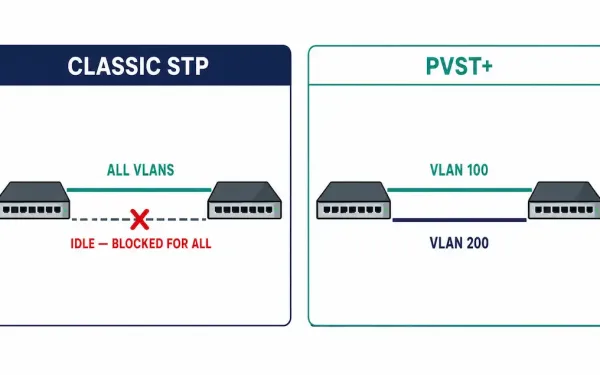
PVST+: Per-VLAN Spanning Tree Explained
Classic STP runs one spanning tree for the entire switched network, no matter how many VLANs exist. That means every VLAN shares the same root bridge and the same blocked links — one uplink ends up carrying nothing while every other uplink carries everything, regardless of which VLANs actually need which paths. PVST+ (Per-VLAN Spanning...
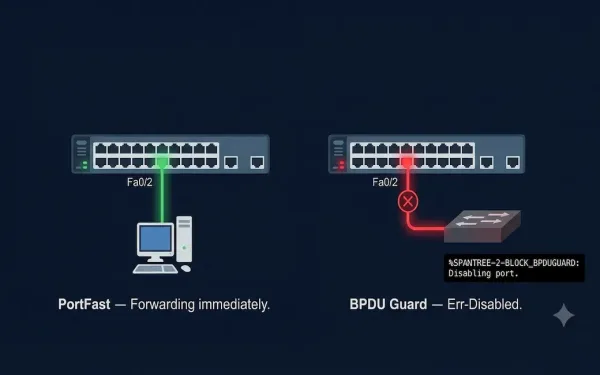
How to Configure PortFast and BPDU Guard
This guide covers PortFast and BPDU Guard configuration for CCNA (200-301) and CCNP (ENARSI) exams, including hands-on labs, best practices, and how these features interact with RSTP. The switch port directly connected to an end station cannot create a bridging loop, so the port can safely skip straight to the forwarding state rather than progressing...
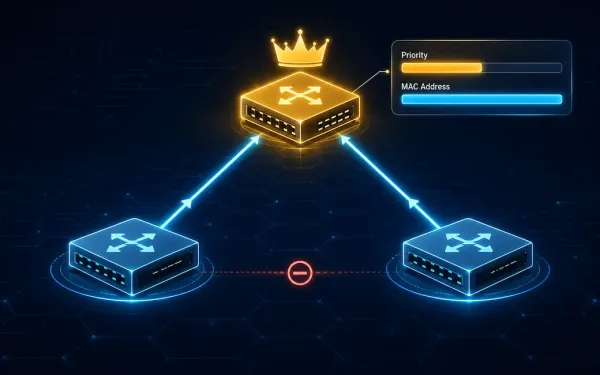
Spanning Tree Bridge ID Configuration: Root Primary and Root Secondary Explained
When configuring a specific switch as the root bridge, its bridge ID priority value must be lower than the bridge priority values of all other switches on the network — in Spanning Tree Protocol (STP), a lower priority value always wins the root bridge election. There are two different methods for configuring the bridge priority...