Muhammad Khattak
Routing and switching specialist, CCNA certified, with extensive experience in network configuration and troubleshooting. Covers OSPF, EIGRP, VLAN management, and advanced routing concepts.
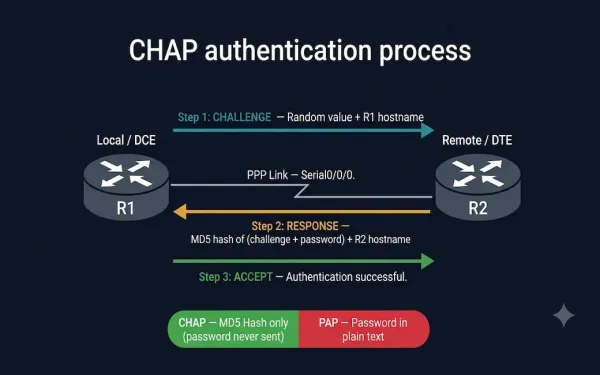
How to Configure Challenge Handshake Authentication Protocol (CHAP)
Challenge Handshake Authentication Protocol is the standard PPP authentication method for securing point-to-point WAN links on Cisco routers. It authenticates the remote router without transmitting the password in plain text, protecting the link against replay attacks through a randomly generated challenge value that changes with each authentication attempt. This guide covers how it works, its...
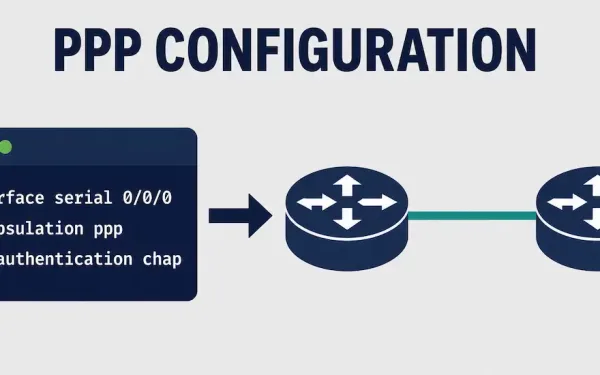
PPP Configuration: A Complete Cisco IOS Guide
Remember that HDLC is the default encapsulation protocol on Cisco router serial interfaces. If PPP configuration isn’t explicitly applied, the default HDLC encapsulation remains in use. To set PPP as the encapsulation method on a serial interface, PPP must be configured directly on that interface. Consider a simple topology: two routers, Router1 and Router2, connected...
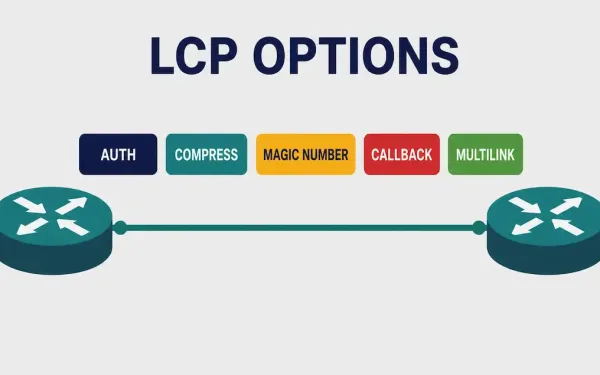
LCP Options: PPP’s Configurable Link Parameters Explained
PPP supports several link options that can be configured optionally during link setup: authentication using PAP or CHAP, compression using either Stacker or Predictor, and Multilink, which combines two or more channels to increase available WAN bandwidth. To negotiate these options, LCP link-establishment frames carry option information in the Data field of the LCP frame....
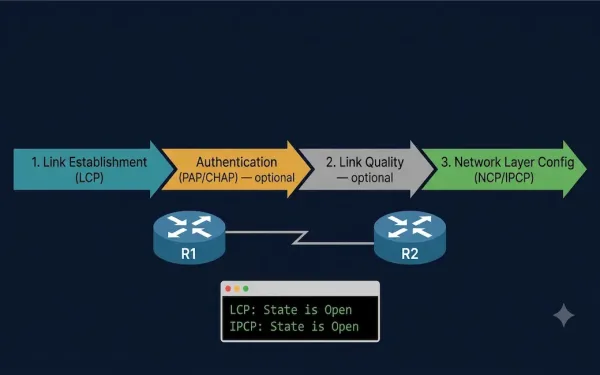
PPP Session: LCP Phases, Packet Structure, and Frame Types
When two devices are first turned on, there is no active link-layer connection between them. Once the physical connection is made, the devices can begin establishing a PPP (Point-to-Point Protocol) session. There are three phases to establishing a PPP session: Phase 1: Link establishment and configuration negotiation Before PPP exchanges any network layer datagrams, such...
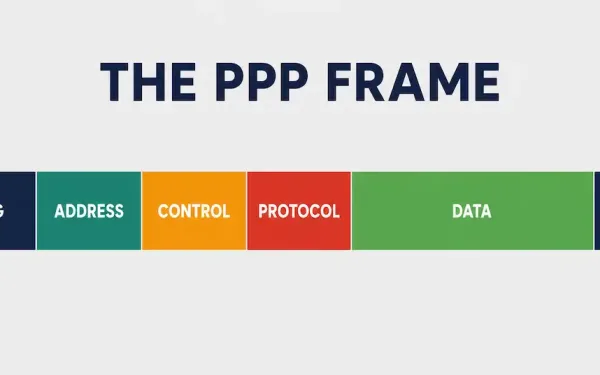
PPP Components: Layered Architecture and Frame Structure Explained
A layered architecture is a logical model that helps different parts of a communication system work together. PPP’s layered model maps reasonably well onto the OSI model: both share the same physical layer, though PPP distributes the work of its Link Control Protocol (LCP) and Network Control Protocol (NCP) differently than OSI’s strict layer boundaries....
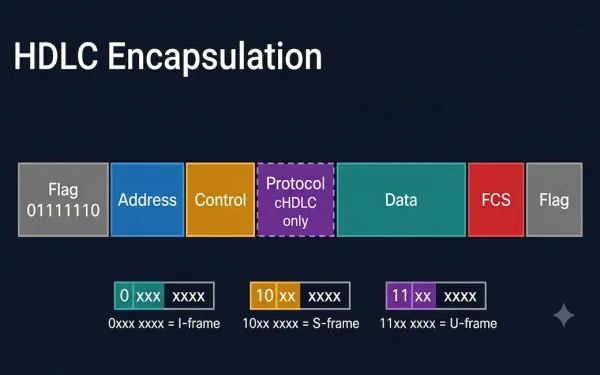
HDLC Encapsulation Protocol
HDLC is the default encapsulation protocol on point-to-point connections, dedicated links, and circuit-switched links when both ends of the link are Cisco devices. It is a synchronous Data Link layer bit-oriented protocol, originally developed from IBM’s Synchronous Data Link Control (SDLC), and later standardized by ISO as ISO/IEC 13239. HDLC provides both connection-oriented and connectionless...
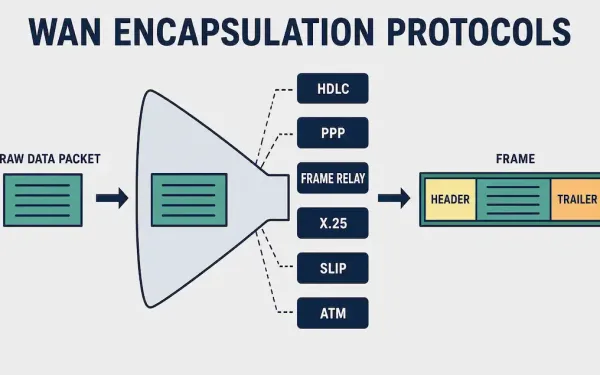
WAN Encapsulation Protocols: HDLC, PPP, Frame Relay, X.25, SLIP, and ATM
The network layer passes data down to the data link layer for transmission over the physical layer. The data link layer creates frames by adding the necessary checks and controls around that network layer data — a process called encapsulation. On a router’s serial interface, encapsulation must be explicitly configured to guarantee both ends of...
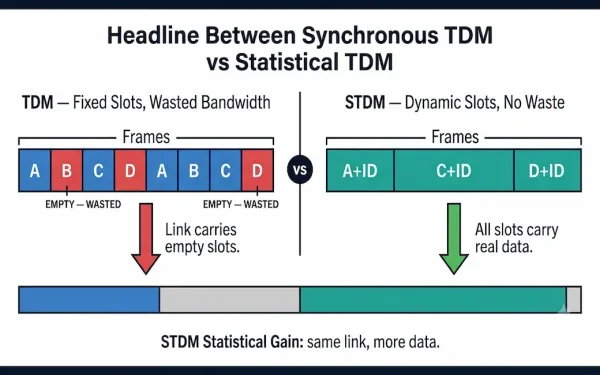
Statistical Time-Division Multiplexing (STDM): Complete Guide
Statistical Time-Division Multiplexing is an advanced multiplexing technique that dynamically allocates transmission time slots to active channels, eliminating the bandwidth waste inherent in standard Time-Division Multiplexing (TDM). Understanding STDM — how it differs from TDM and FDM, how its frame structure works, and where it is applied in real WAN protocols — is essential knowledge...
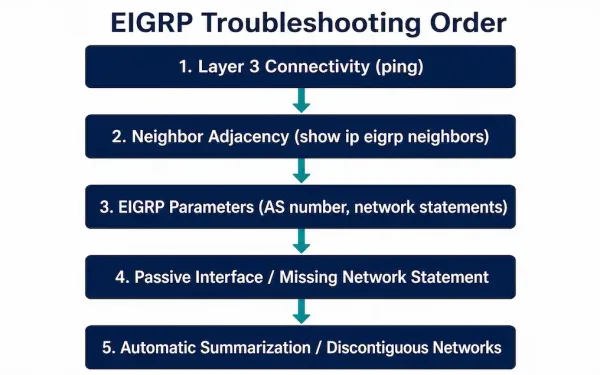
Basic EIGRP Troubleshooting Commands
EIGRP troubleshooting comes down to a small, repeatable set of commands, applied in a logical order — from basic connectivity, through parameter matching, to specific configuration issues like passive interfaces and automatic summarization. Knowing this order well enough to work through it without hesitation is what separates methodical troubleshooting from guessing. This guide walks through...
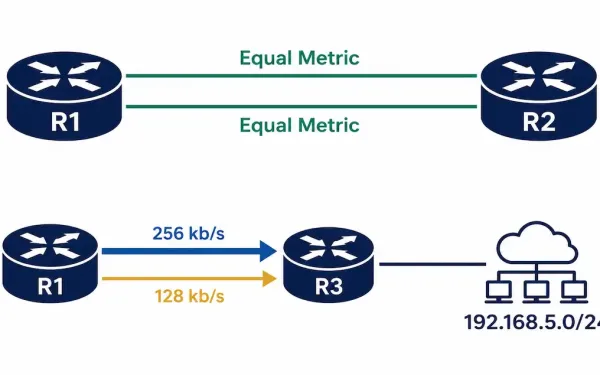
How to Configure EIGRP Load Balancing for IPv4
When a router has more than one valid path to the same destination, EIGRP doesn’t have to pick just one and ignore the rest. It can install multiple paths and split traffic across them — either paths with genuinely equal cost, or, uniquely among major routing protocols, paths with different costs entirely. Both are configurable,...