Networking
CCNA tutorials, Cisco guides, and enterprise networking insights for IT professionals.
Email Protocols: SMTP, POP3, and IMAP
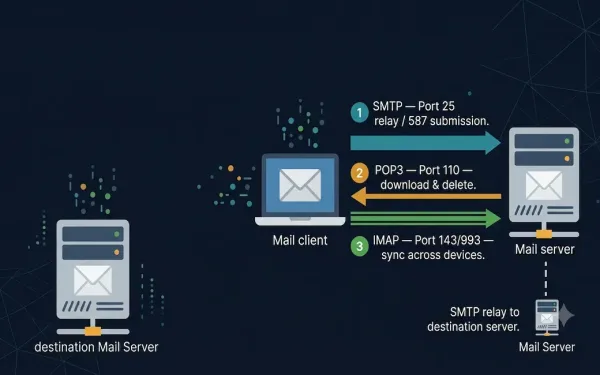
Email is one of the primary services running on the internet. The email server stores email messages in a database, and email uses a store-and-forward method for sending and holding messages. Email clients communicate with servers running mail services to send and receive email, and the client-connected server in turn communicates with other mail servers...
HTTP and HTML Explained: How the Web Communicates
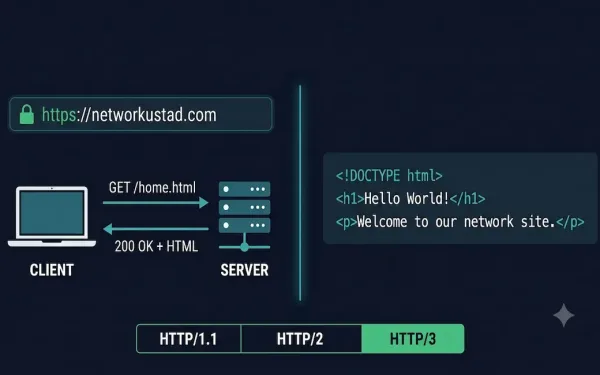
HTTP and HTML are the two foundational technologies behind every web page you visit. They work together but do completely different jobs. HTTP (HyperText Transfer Protocol) is the application-layer protocol that governs how data is requested and delivered between a web server and a client. HTML (HyperText Markup Language) is the markup language that structures...
Client-Server vs. Peer-to-Peer: Network Models Explained
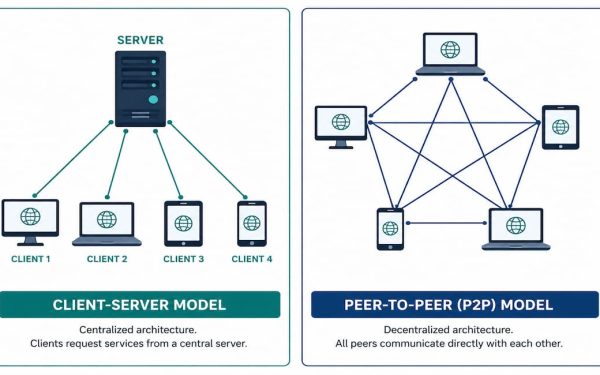
Almost every network interaction you have falls into one of two models: client-server, where a dedicated device provides a service to others, or peer-to-peer, where devices share resources directly with each other, no dedicated server required. Understanding both — and knowing which one a given application actually uses — matters for everything from troubleshooting to...
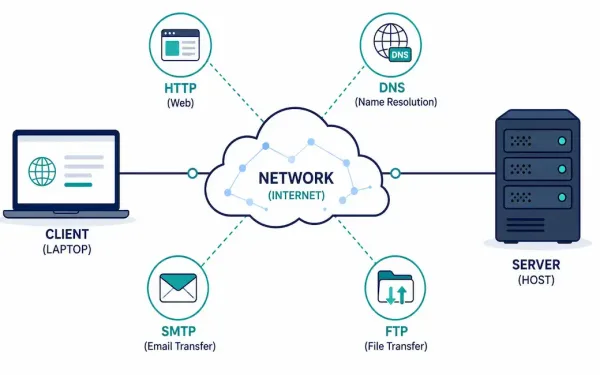
The Application Layer: Protocols, Function, and How It Fits the Network Stack
Every time you load a web page, send an email, or transfer a file, you’re using the application layer — the topmost layer of the network stack, and the only one most users ever interact with directly. Everything below it exists to support what happens here. This guide covers what the application layer actually does,...
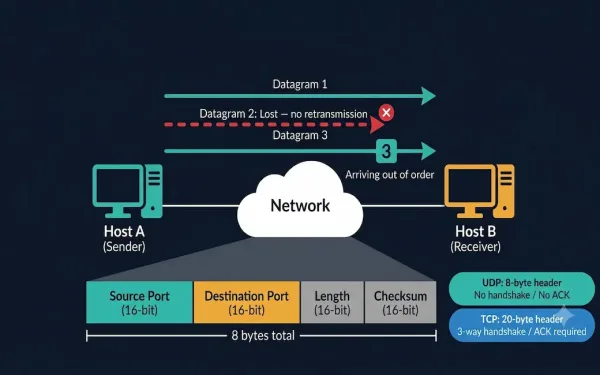
User Datagram Protocol (UDP): Complete Guide for CCNA
The User Datagram Protocol (UDP) is a lightweight Transport Layer protocol that provides fast, low-overhead data transmission between applications without establishing a connection first. Defined in RFC 768, UDP is one of the two core Transport Layer protocols alongside TCP and is directly tested on the CCNA 200-301 exam. Understanding UDP — its header structure,...
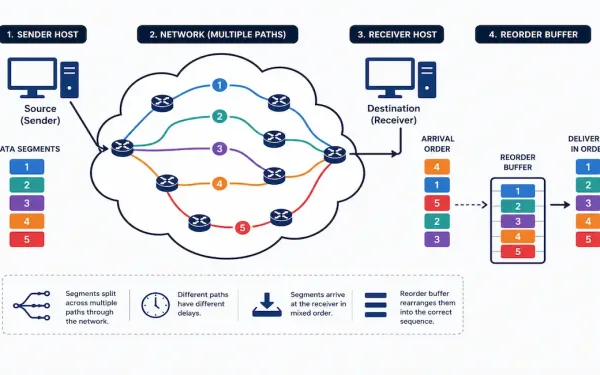
TCP Reliability and Flow Control Explained
TCP takes data from an application, breaks it into segments, wraps each one in a header, and hands it off to IP for delivery across the network. None of that guarantees the segments arrive in order, or that they arrive at all. Reliability and flow control are the two mechanisms that turn an unreliable network...
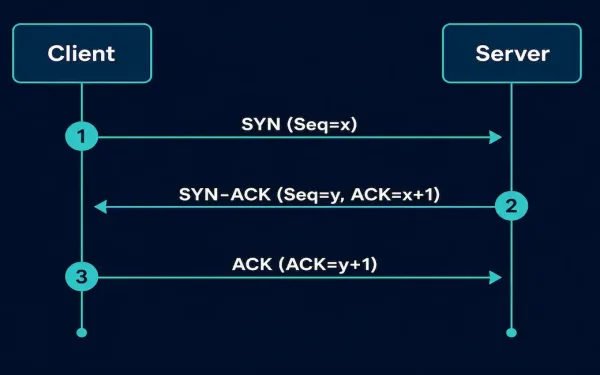
TCP 3-Way Handshake: How It Works and Why It Matters
Every reliable TCP connection starts the same way: three packets, exchanged in a fixed sequence, before a single byte of real data moves. This is the TCP 3-way handshake, and it’s one of the most fundamental mechanics in networking. Understanding it isn’t just an exam requirement — it’s the foundation for reading packet captures, diagnosing...
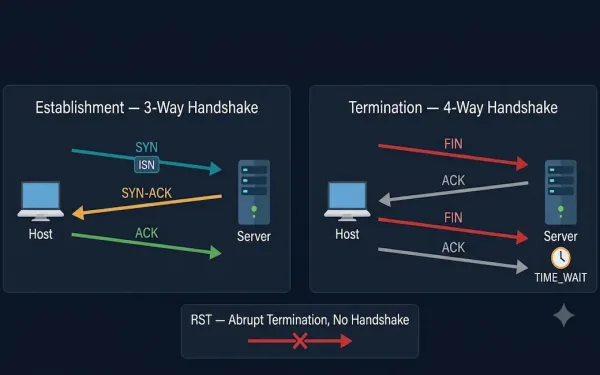
TCP Connection Establishment and Termination
All application processes on a server use unique port numbers. A network administrator can use default ports (e.g., 80 for HTTP, 21 for FTP) or configure custom ports manually, ensuring no conflicts. An active server application listening on an open port means the transport layer accepts and processes segments addressed to that port number. Every...
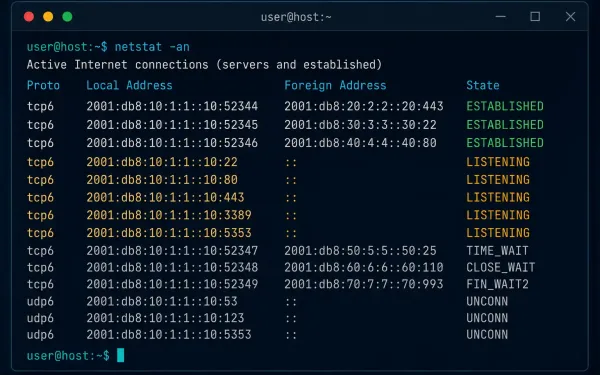
The Netstat Command: Monitor and Troubleshoot Network Connections
Knowing which TCP connections are active on a host is one of the fastest ways to catch a problem before it becomes an incident. An unexplained outbound connection can mean malware. A port stuck in the wrong state can mean a misbehaving application. The netstat command gives you visibility into both, on Windows and Linux...
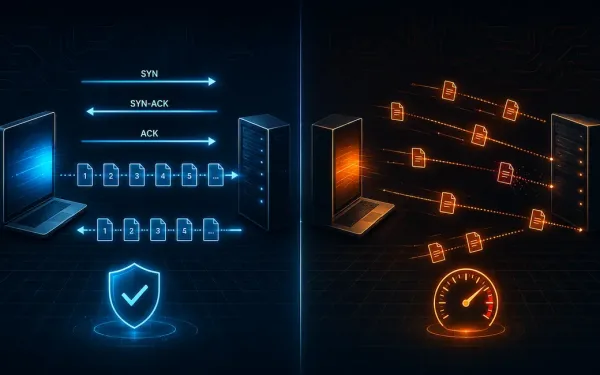
TCP vs UDP: Transport Layer Protocols Explained
TCP and UDP are the two primary transport layer protocols handling data communication between hosts on an IP network. TCP is connection-oriented; UDP is connectionless. That single distinction cascades into almost every other difference between them — reliability, ordering, flow control, and overhead all follow from that one design choice. TCP: Connection-Oriented and Reliable Transmission...