
Networking
CCNA tutorials, Cisco guides, and enterprise networking insights for IT professionals.
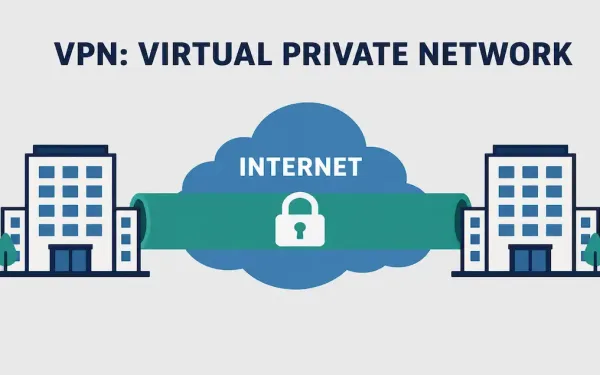
VPN Technology: How Virtual Private Networks Work
VPN is the abbreviation for Virtual Private Network. VPN technology creates a safe, encrypted connection over an unsecured network, such as the Internet. It effectively extends a private network across a public network, letting remote users and offices communicate as if they were directly connected to the same private infrastructure. A virtual private network uses...
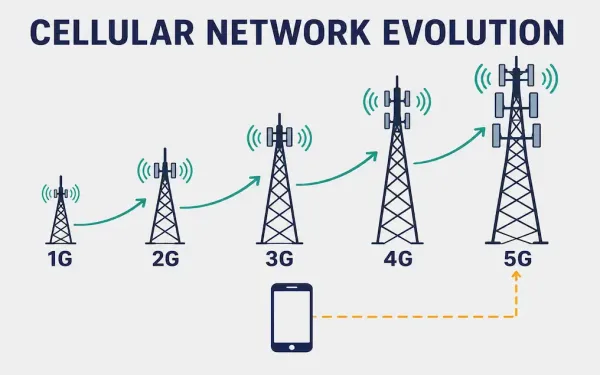
Cellular Network: How Cellular WAN Technology Works
Cellular networks are a type of wireless WAN technology. They provide connectivity to users and remote locations where no other WAN access technologies are available. Millions of users rely on cellular networks daily to email, browse the web, download apps, stream video, and make voice calls from smartphones, tablets, laptops, and even routers equipped with...
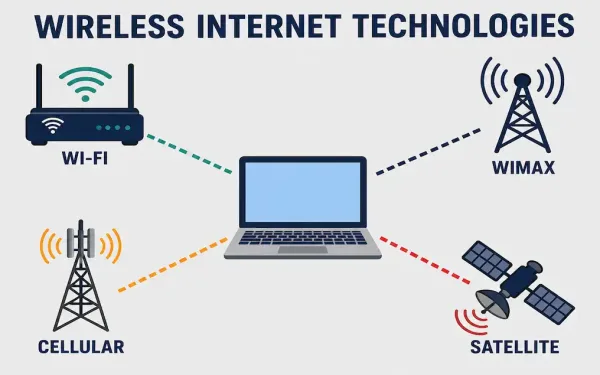
Wireless Internet: Wi-Fi, WiMAX, Satellite, and Cellular Explained
Wireless internet uses radio waves instead of physical wires to connect a personal computer, laptop, smartphone, or other device to the Internet. Early wireless technologies lacked the high speed of broadband connections like cable and DSL, but modern wireless technologies have largely closed that gap, and in some cases surpassed it. Wireless Internet Service Providers...
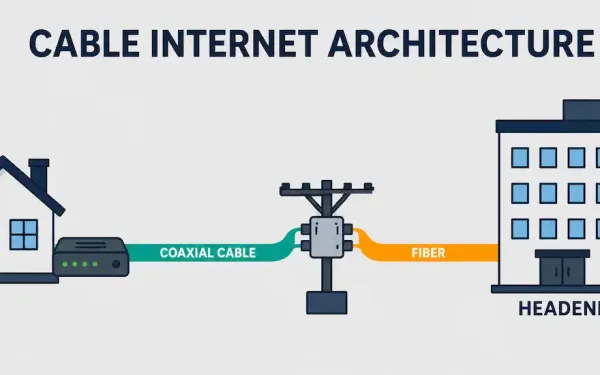
Cable Internet: How It Works, Speeds, and Architecture
Network and Internet access through cable TV is a type of broadband Internet access that uses the existing infrastructure of the television cable system. It provides network edge connectivity from an Internet Service Provider (ISP) to an end user in much the same way DSL and Fiber to the Home (FTTH) do, but riding on...
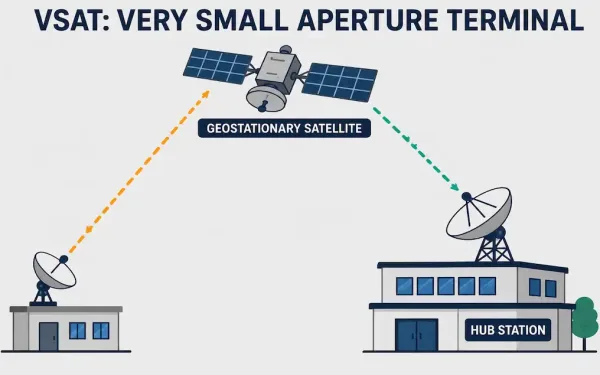
What Is VSAT? Very Small Aperture Terminal Explained
VSAT stands for Very Small Aperture Terminal. It’s an important WAN technology for both home users and organizations that need connectivity in remote areas where fiber optic, copper cable, and microwave links simply aren’t available. VSAT creates a private WAN using satellite communications, making it one of the few WAN technologies genuinely usable almost anywhere...
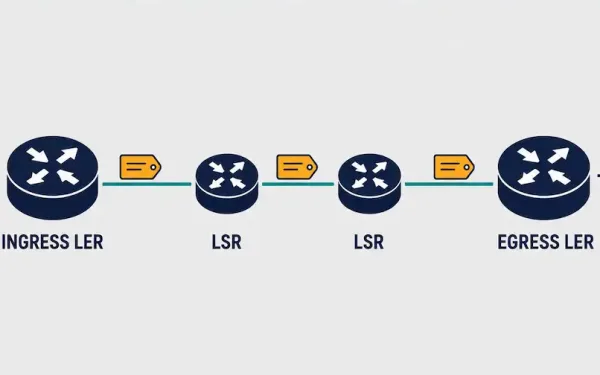
What Is MPLS? Multiprotocol Label Switching Explained
MPLS stands for Multiprotocol Label Switching. It’s a wide area network protocol that forwards data from one router to another based on short path labels rather than IP network addresses. The concept originated in 1996 among engineers from Cisco, IBM, and StrataCom, was picked up by an IETF working group in 1997, and was formally...
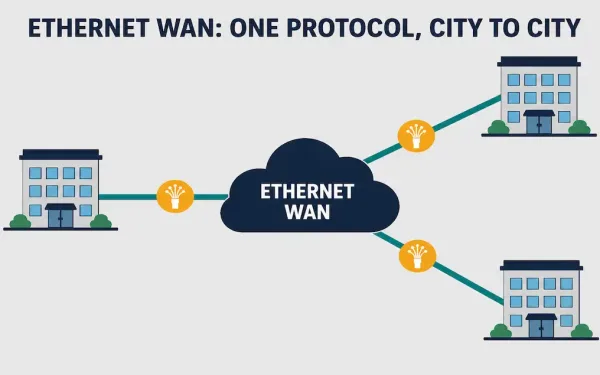
What Is Ethernet WAN? A Complete CCNA Guide
Ethernet was initially considered unsuitable as a WAN access technology, largely because early Ethernet cabling standards supported only relatively short distances — copper-based Ethernet was historically limited to around 100 meters per segment. Newer Ethernet standards over fiber optic cabling changed that entirely, extending reach far beyond what copper or original Ethernet specifications ever supported....
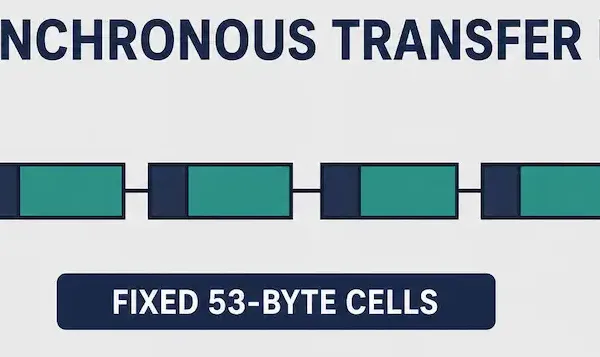
What Is ATM? Asynchronous Transfer Mode Explained
ATM stands for Asynchronous Transfer Mode. It’s a cell-based networking technology that uses asynchronous time-division multiplexing (also called statistical TDM) to carry voice, video, and data across private and public networks. That “asynchronous” in the name is the key detail: unlike synchronous TDM, which reserves fixed time slots for each source whether or not it...
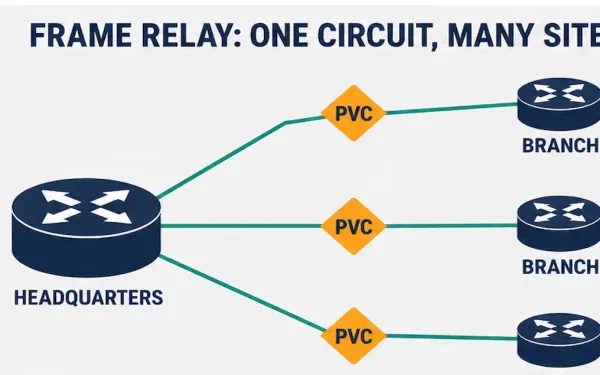
What Is Frame Relay? A Complete CCNA Guide
Frame Relay is a packet-switching telecommunication service designed for interconnecting enterprise LANs over a wide area network. It’s a Layer 2, non-broadcast multi-access (NBMA) WAN technology that allows a single serial interface on a router to connect to multiple remote sites using permanent virtual circuits (PVCs) or, less commonly, switched virtual circuits (SVCs). Though largely...
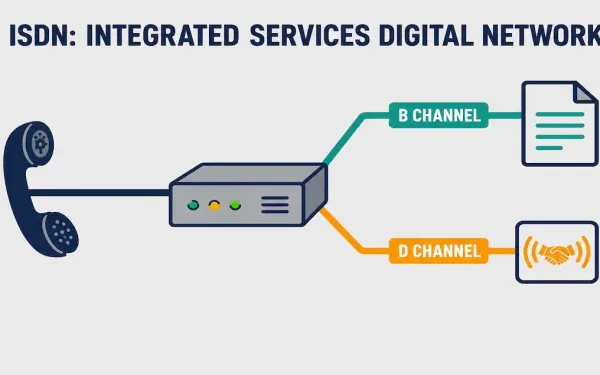
What Is ISDN? Integrated Services Digital Network Explained
ISDN stands for Integrated Services Digital Network. It’s a circuit-switched technology that uses the local loop of the Public Switched Telephone Network (PSTN) to carry fully digital signals, rather than the analog signals traditional telephone lines were originally designed for. ISDN is a set of communication standards capable of transmitting voice, data, and signaling simultaneously...